How to Teach the Alphabet to a 3 or 4 Year Old
Teach letter sounds, not just names, after building your child's phonological awareness first.
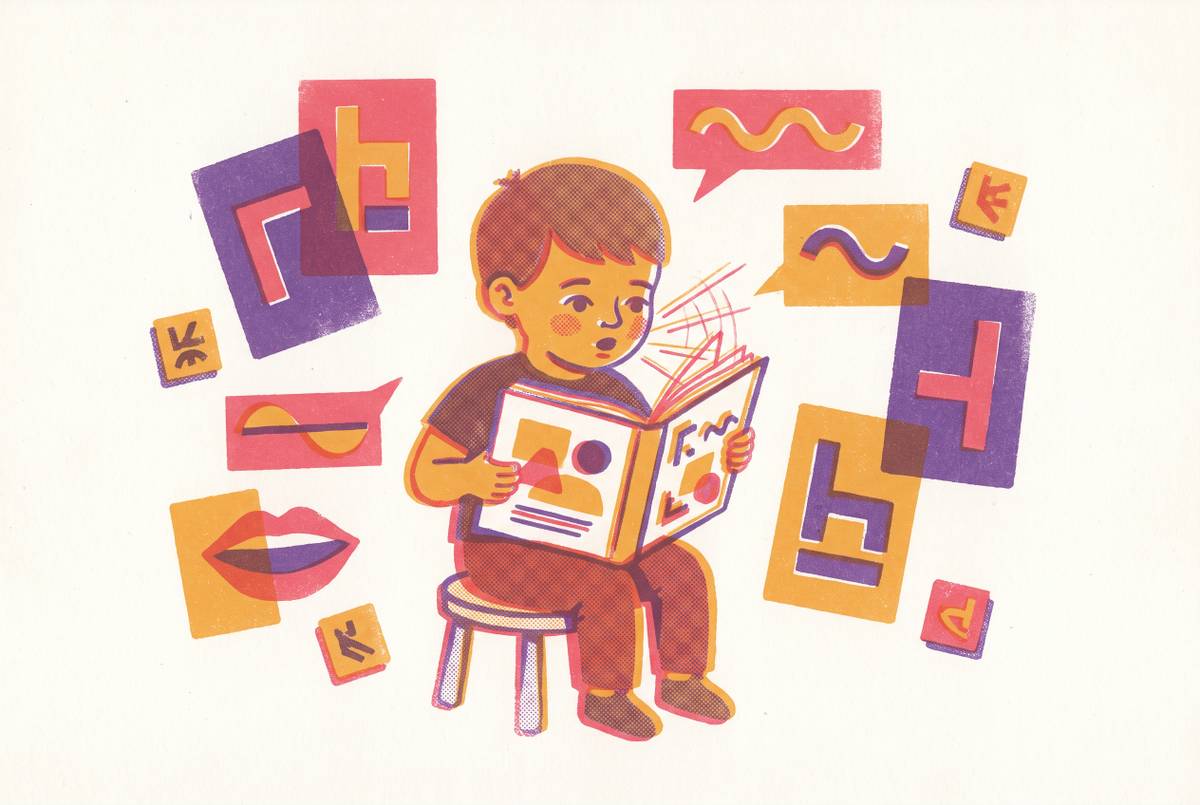
Most parents can sing the alphabet song in under fifteen seconds. Almost none of them pause to ask what that song actually teaches a child. The answer matters: the Science of Reading is clear that the alphabet isn't a set of 26 shapes to memorize in order, and teaching it that way misses the real work entirely, which is connecting written symbols to the sounds of spoken language.
Why alphabet learning is really about sound, not shape
A child who can belt out "A, B, C, D" from start to finish has learned a naming sequence. That's a real skill, and it's not nothing. But it isn't reading, and it isn't even the first step toward reading, because English is an alphabetic language: its letters stand for sounds, not pictures and not meanings. The entire reading system runs on the phonological system, the part of the brain that processes spoken sound, not the visual system that recognizes shapes.
Compare this to a logographic language like Chinese, where a written character can carry meaning on its own. English doesn't work that way. A letter sitting by itself means nothing until it gets converted into a sound, and that sound combines with others to build a word. This is the alphabetic principle, and it has two parts. Alphabetic understanding is knowing that words are made of letters that represent speech sounds. Phonological recoding is the skill of translating those printed letters back into sounds to pronounce a word correctly. A child who can sing every letter name but can't do either of these things hasn't started down the path to reading yet. They've memorized a song.
Phonological awareness alongside letter recognition
Before a child can connect a letter to a sound, the child has to be able to hear that sound separate from any letter. That skill is called phonological awareness, and letter recognition can't substitute for it no matter how many flashcards are involved.
The most precise form of this skill is phonemic awareness: the ability to recognize and manipulate individual sounds in spoken words. Knowing that "cat" is built from three distinct sounds, /k/, /æ/, and /t/, is a prerequisite for ever connecting those sounds to the letters c-a-t. And this skill develops in a predictable order, moving from big chunks of sound down to small ones. A 3-year-old is usually working at the rhyme level, noticing that "cat" and "hat" sound alike. Syllable segmentation, clapping out "wa-ter" as two beats, appears in most children by age 4 to 5. Somewhere in that same window, a 4-year-old starts being able to isolate initial sounds, picking out that "duck" starts with /d/.
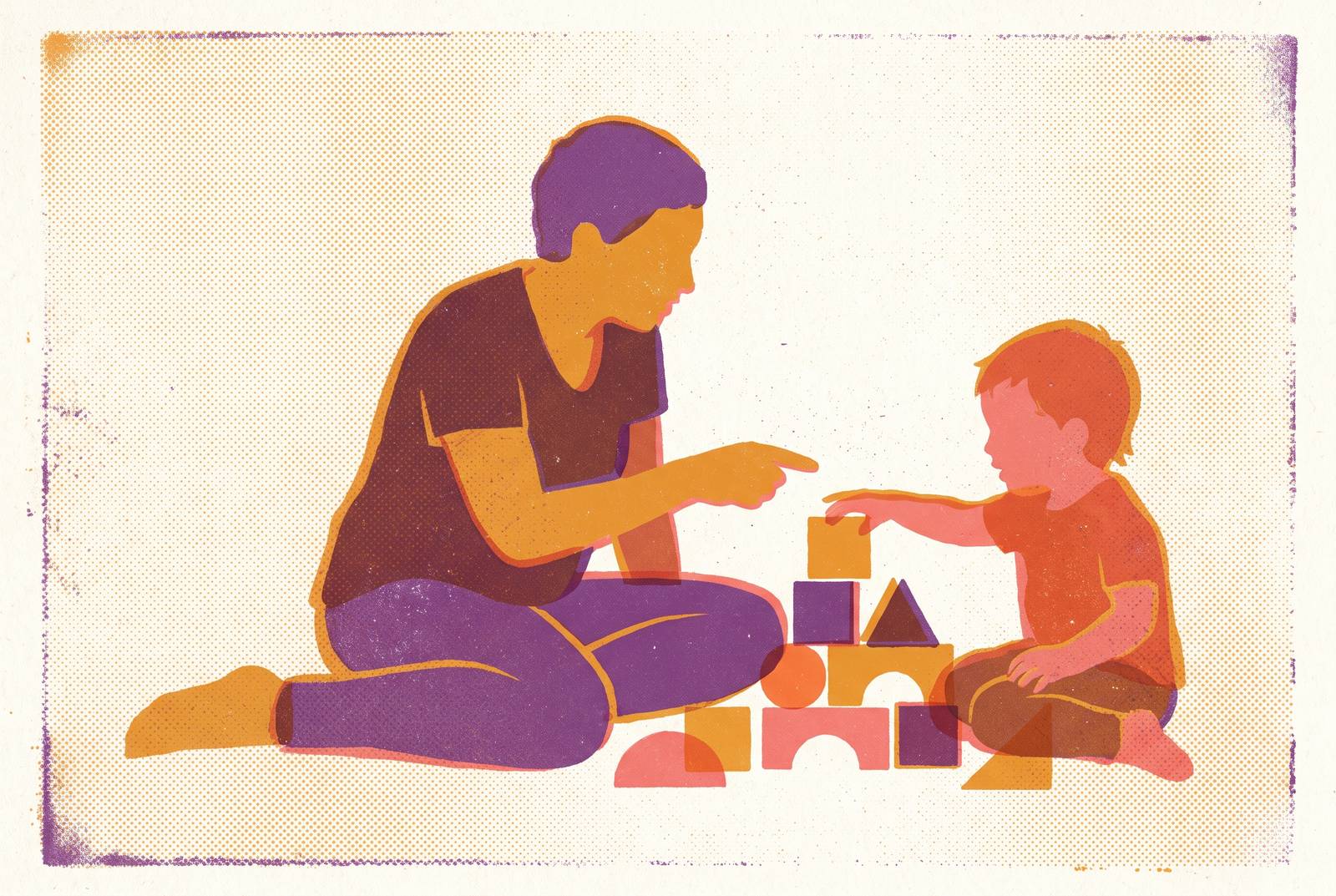
The reassuring part: most families are already doing the activities that build this. Rhyming games at bedtime, clapping out syllables in a name, asking "what sound does that start with" mid-conversation, are laying the phonological groundwork that letter-sound instruction will later attach to. Oxford University Press's guidance for ages 3 to 5 recommends exactly this kind of moment: pausing mid-game to ask a child what sound "duck" begins with, turning an ordinary interaction into a natural entry point for phonological work.
Some parents assume it works the other way around, that teaching letter-sound matches first will cause phonological awareness to develop as a side effect. The evidence points the opposite direction. Phonological awareness is the soil that letter instruction grows in. It isn't a byproduct of it. Teaching tools grounded in the Science of Reading, like Ello, build this sound-first principle into instruction from the start, connecting letters to phonemes in real time rather than treating letter recognition as a visual naming task, and adapting based on how each child responds to that connection.
Teaching letter names and letter sounds together
Once a child has some phonological groundwork in place, the research supports teaching a letter's name and its most common sound together, at the same time, rather than teaching all 26 names first and circling back for sounds later. Order matters here too.
The National Center on Improving Literacy recommends starting with high-frequency letters, working with just a few at a time, and staggering letters that look or sound alike. "B" and "d" are mirror images of each other on the page, so they should be taught apart, not back to back. "M" and "n" sound similar when spoken, so the same rule applies there. Introducing confusable pairs close together in time increases errors and slows down the whole process of locking the letter-sound link into memory.
Each letter should be anchored to its single most common, most predictable sound before anything else. Every letter in English has at least one reliable sound, and that's the one to teach first. The short /a/ in "mat" comes before the long /a/ in "mate." This isn't a stylistic preference. NCIL notes that the same letter can represent more than one sound depending on the word it appears in, which makes sequencing from most-common to least-common sound a practical necessity for avoiding confusion early on.
The alphabet song still has a place in this. It teaches alphabetical order, which is a genuinely useful skill on its own. Parents just need to know it teaches letter names, not letter sounds, and pair it with explicit sound practice rather than letting it stand in for that work. Irregular words like "was," "is," and "know" sit outside this whole system. They can't be sounded out using the alphabetic principle and need to be learned by sight instead. These words exist, but they're the exception. NCIL is direct on this point: learning the alphabetic principle thoroughly, and using it to decode unfamiliar words, works far better as a long-term strategy than memorizing whole words by sight or guessing from context.
What multi-sensory practice adds
Once the sequencing is in place, parents often ask how practice should actually happen day to day. Multi-sensory activities, tracing letters in sand, forming them with a body, matching a sound to a texture, can make this practice more engaging and more memorable. What the research shows is that what matters most is whether the instruction is explicit and systematic. The number of senses involved is a secondary question.
A typical multi-sensory phonics moment might have a child see the letter "m," hear the /mmm/ sound, trace the shape on sandpaper, and then form the letter with their arms. That combination of visual, auditory, tactile, and physical channels builds several different associations with the same letter-sound link. Continental Press's Science of Reading explainer describes this as brain-based instruction, building stronger neural connections and improving how well a child retains what's been taught.
A 2025 study in Early Childhood Research Quarterly tested this directly and found that young children benefited from explicit, systematic alphabet instruction whether or not it was multi-sensory. Emergent bilingual children and English monolingual children benefited similarly, though the study's authors note this may reflect the fact that both groups shared similar socioeconomic status and language backgrounds. The takeaway for a parent at home: elaborate materials and props aren't required. A clear explanation, consistent practice, and a gradual progression through letters are what build the skill, regardless of the activity's format. Tracing in sand, playing with letter magnets, playing "I spy the sound," all of these work because they create repeated, explicit encounters with a letter-sound connection.
One multi-sensory technique does carry extra weight for certain children: pairing a letter with a memorable image, like "b" alongside a picture of a ball, strengthens the sound-symbol link and gives English language learners and children with diverse learning needs an added hook. A visual bridges a language gap in a way that lets an abstract letter attach to something concrete and familiar.
The five components of reading
Alphabet instruction is the bridge between phonological awareness and phonics, one piece inside a much larger structure that the Science of Reading maps out in five parts: phonemic awareness, phonics, fluency, vocabulary, and comprehension. Each one builds on the one before it.
Phonemic awareness, isolating and manipulating individual sounds, comes first and makes phonics possible. Phonics is where alphabet instruction actually lands: connecting sounds to letters so a child can decode a written word. Fluency is reading with speed and accuracy, which frees up mental bandwidth for understanding meaning instead of sounding out every word. Vocabulary supplies the meanings behind the words a child has just decoded. Comprehension, understanding what's been read, is the entire point of the exercise.
Phonics Hero's Science of Reading overview traces the path a child follows through this structure: from the alphabetic principle and early phonics knowledge, to phonemically decoding unfamiliar words, to orthographically mapping words so they're recognized automatically. That automatic recognition comes from sound-based decoding built up over time. A child who sounds out "cat" letter by letter today is building toward reading "cat" instantly tomorrow, and once that happens, attention shifts from decoding to meaning.
Fluency isn't the goal for a 3- or 4-year-old. Action for Children's developmental breakdown places phonemic awareness, sound matching and rhyming, along with early letter recognition, as the focus for ages 3 to 4. Phonics blending and decoding become the focus at 4 to 5. Success at this age looks specific and modest: a child who hears sounds inside words and can connect a few of those sounds to their matching letters. That's the whole target. Everything past that belongs to the next stage.
Applying the same approach to struggling or resistant children
Children who struggle with alphabet learning, including those with dyslexia, language disorders, or who simply push back against the activity, need the same explicit, systematic instruction described above. What changes for them is the amount of repetition, the size of the steps, and the care given to accuracy.
NCIL states this directly: the evidence-based strategies that work for all children apply here too, but children who struggle need highly systematic, highly explicit instruction paired with substantial accuracy practice to learn the alphabetic principle thoroughly. Resistance itself is often a sign of difficulty rather than defiance. A child who refuses to sit through an alphabet activity may simply be avoiding the feeling of getting it wrong. Lowering the pressure, starting with sounds the child already knows, and celebrating small wins can shift that dynamic considerably. Choosing a book a level easier than a child's current ability lets them feel successful and start associating reading with something they're capable of, rather than something that exposes a weakness. Letting a child pick the book or the activity preserves their sense of control and cuts down the power struggle that so often surrounds reading practice with a reluctant learner.
For children learning English alongside another language at home, the 2025 research offers real reassurance: explicit, systematic alphabet instruction worked equally well for bilingual children in that study, and a fundamentally different method wasn't needed, though connecting new sounds to sounds already familiar from a child's home language can serve as a useful bridge. Dyslexia works the same way. It doesn't call for a different foundational method, only the same method applied with more precision, more practice cycles, and more patience. A child with dyslexia isn't a child who can't learn to read. That child needs the alphabetic principle taught more explicitly than most children do, and the approach described throughout this piece is built to flex that way.
What to look for when choosing an alphabet app
Alphabet apps and tools are not interchangeable, even when they look similar on a store listing. The gap between a tool that builds the alphabetic principle and one that only drills letter names comes down to what actually matters for learning to read.
A good starting question is whether a tool teaches letter sounds or stops at letter names, since a tool that only drills "A, B, C" recognition leaves the harder, more important work undone. Next, check whether the tool follows an explicit, systematic sequence, introducing a few letters at a time and staggering pairs like "b" and "d" or "m" and "n", rather than marching through letters in simple alphabetical order regardless of how confusable they are. Whether a tool adapts to what an individual child actually does matters just as much: a child who already has the /k/ sound solid doesn't need to repeat it as often as a child still working on isolating initial sounds, and a static, one-size-fits-all sequence can't make that distinction. Because phonological awareness is the foundation letter instruction grows in, adaptive teaching apps like Ello that assess and strengthen phonological awareness alongside letter-sound work make the connection explicit rather than hoping it develops naturally as a byproduct. Purpose-built AI teaching tools that understand the sequencing science, introducing high-frequency letters first, staggering confusable pairs, and connecting each letter to its most common sound, can personalize this progression to each child's pace and readiness, reinforcing the alphabetic principle as it takes root. The strongest tools, whatever form they take, are the ones built around what the Science of Reading has already established: that a letter is only useful once it has a sound attached to it.