Reading Apps Built on the Science of Reading for Kids Under 10
Effective reading apps teach phonics, fluency, vocabulary, and comprehension—not just one of them.
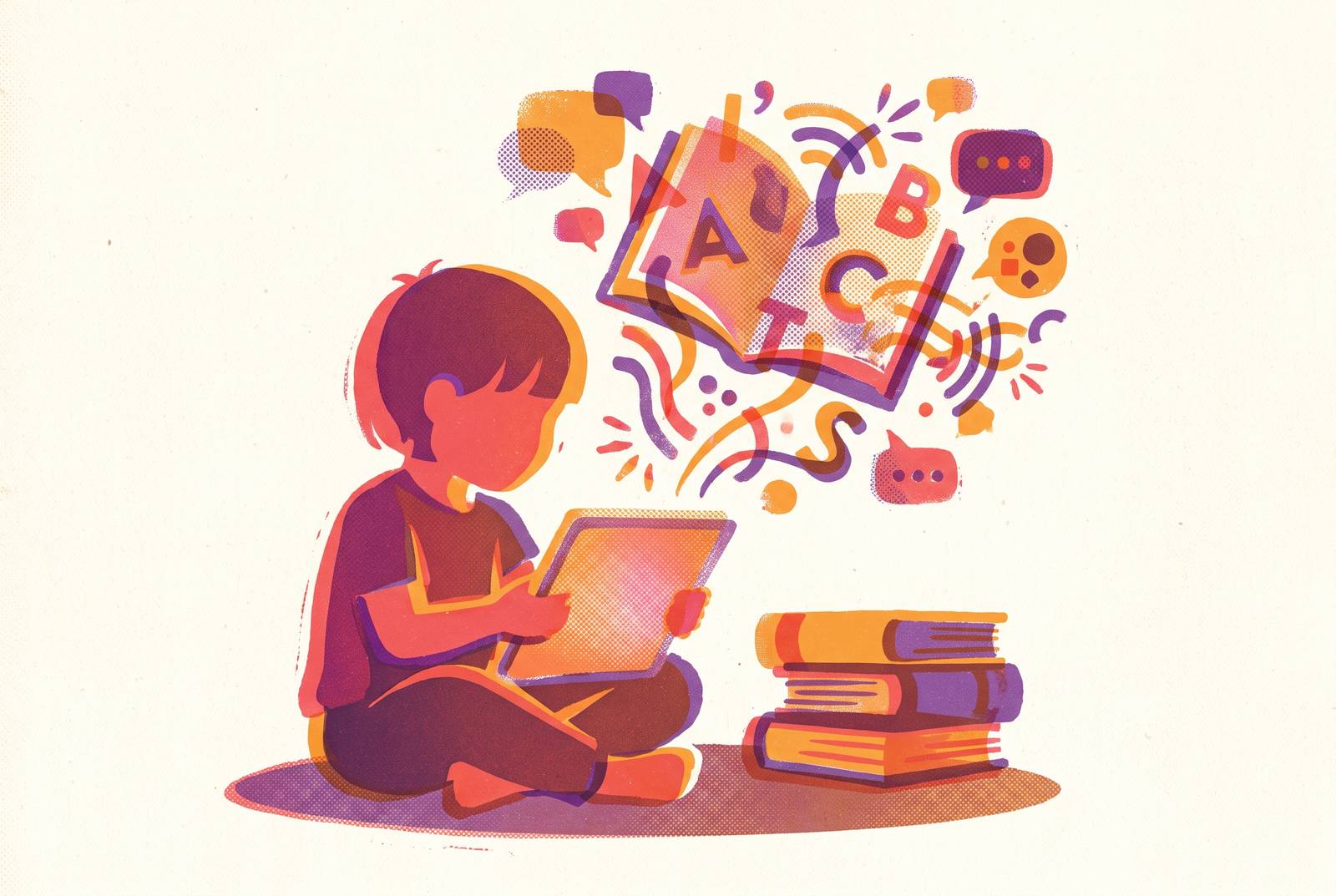
Reading apps for kids under 10 have become one of the most crowded categories in ed-tech, and most of them get judged on the wrong criteria. The real test is whether an app teaches all five components the National Reading Panel identified. It's whether it teaches all five components the National Reading Panel identified: phonemic awareness, phonics, fluency, vocabulary, and comprehension. Miss even one, and the app is training a narrower skill than parents think they're buying.
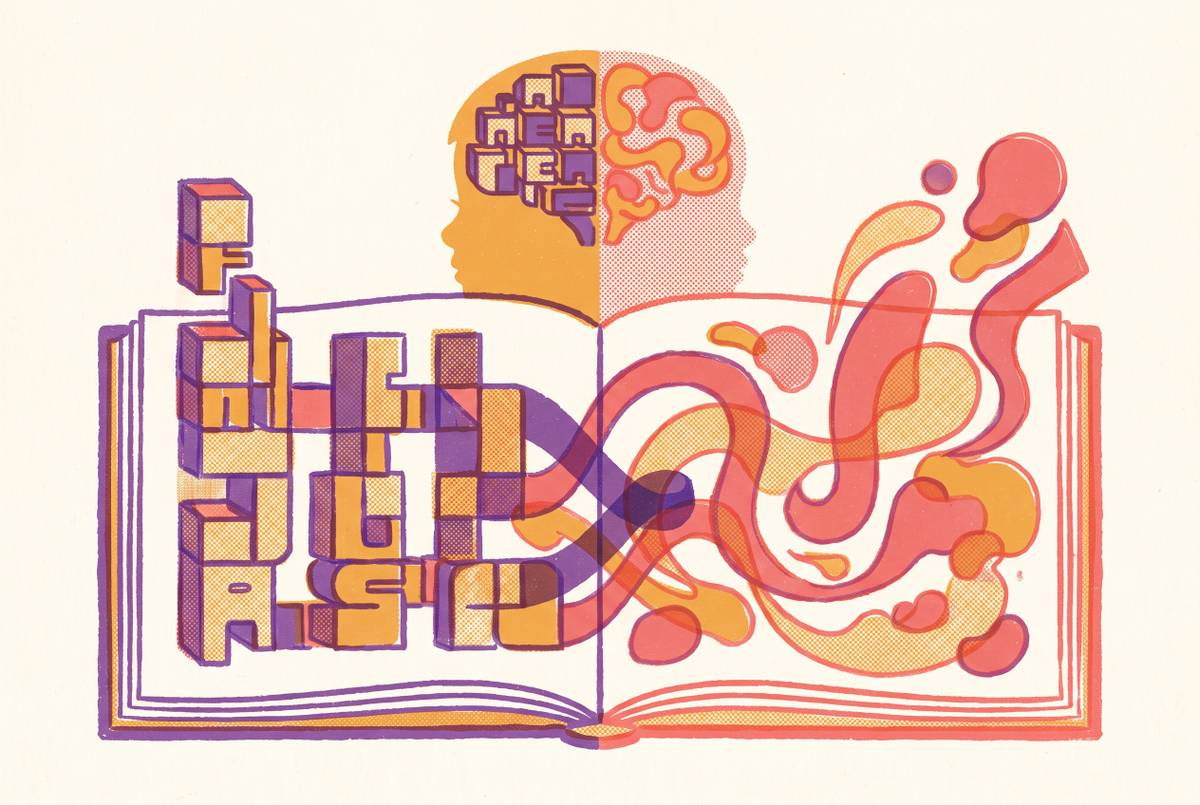
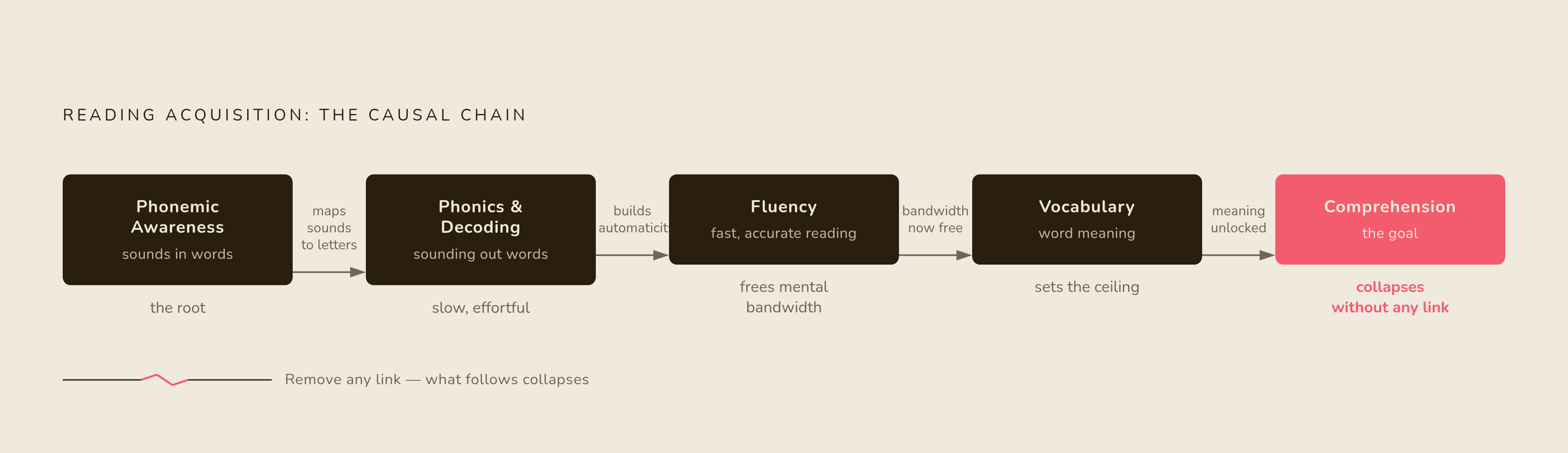
Reading isn't a skill kids pick up by osmosis. Speech develops naturally through exposure, but reading has to be taught, explicitly and in a specific order, because the brain has no dedicated reading center to activate on its own. That's the foundation the Science of Reading rests on, and it's why the five components matter so much: phonemic awareness underlies decoding, decoding enables fluency, fluency frees up mental bandwidth for comprehension, and vocabulary knowledge determines how far comprehension can go once decoding stops being the bottleneck. Skip a step, and the whole sequence wobbles.
How the SOR movement arrived at this moment
The Science of Reading is a body of converging research, pulled from cognitive science, linguistics, psychology, neuroscience, and decades of classroom data, all pointing to the same conclusion about how kids actually learn. It's a body of converging research, pulled from cognitive science, linguistics, psychology, neuroscience, and decades of classroom data, all pointing to the same conclusion about how kids actually learn to decode print. That convergence is what gives it weight. No single study built this consensus; hundreds did, across disciplines that don't normally talk to each other.
The movement gained real traction as a correction to "balanced literacy," an approach that included phonics but rarely taught it explicitly or in sequence. Balanced literacy leaned on something called three-cueing, where kids were nudged to guess unfamiliar words from context, pictures, or sentence shape rather than sounding them out. For strong intuitive readers, that approach sometimes worked well enough to hide the problem. For kids with dyslexia, and for a meaningful share of the broader student population, it didn't. Guessing isn't decoding, and kids who never learned to decode hit a wall the moment texts got harder and the pictures stopped giving clues.
Policy has caught up in a hurry. More than 40 states have now passed laws requiring evidence-based reading instruction. Oklahoma's Strong Readers Act is a clean example: it mandates phonics, vocabulary, and comprehension instruction by law, and it bans three-cueing. At the federal level, one national government has taken up the issue. House passed legislation prioritizing Science of Reading approaches in certain federal literacy grants. That's a lot of legislative energy for a set of ideas that, twenty years ago, lived mostly in academic journals.
What's still debated is less about the five components themselves (there's broad agreement there) and more about implementation: how fast to move kids through phonics scope and sequence, how much decodable text is enough, how to handle multilingual learners inside a Structured Literacy framework. Those are real arguments. But the core claim, that reading requires explicit, sequenced instruction across all five pillars, isn't really contested anymore among reading scientists.
What separates a genuine SOR-aligned reading app from a phonics drill in digital packaging
A lot of otherwise well-intentioned apps teach phonics, sometimes quite well, and stop there. An app that drills letter-sound correspondence systematically is doing something real. It is a phonics app. It's a phonics app. Calling it more than that overstates what it does.
Reading researchers describe comprehension as the product of decoding and language comprehension, not merely their sum. That's a multiplication, not an addition. A zero in either factor collapses the whole product. A child who can decode flawlessly but doesn't understand the vocabulary or the underlying concepts still won't comprehend the text. An app that only builds decoding skill, no matter how well it does that one job, is optimizing half an equation and calling it the whole thing.
A genuinely SOR-aligned app has to do real work across all five areas, not just gesture at them:
Phonemic awareness needs its own tracked instructional time, especially for pre-readers and kids in kindergarten through first grade. This isn't a five-minute warm-up before the "real" lesson. Hearing, segmenting, and manipulating individual sounds in spoken words is foundational work, and it deserves to be measured and sequenced like anything else. Phonics instruction has to be systematic and sequential, following a defined scope rather than jumping around based on what's fun that day. Decodable texts should match what's been taught, so a child never has to guess at a pattern they haven't learned yet. And pairing sounds with the actual printed letters, rather than teaching phonemic awareness or phonics as separate isolated skills, produces stronger results than either alone. Fluency requires repeated reading of connected text, with feedback on speed, accuracy, and expression, not isolated word lists read in a vacuum. Vocabulary instruction needs to be explicit, focused on words a child is likely to encounter in upcoming texts, not left to incidental pickup from context. Comprehension demands active engagement, meaning questions, retelling, and inference-making, rather than a child passively tapping through pages while a story plays.
Beyond the five pillars, a few structural features separate real SOR alignment from marketing language. Adaptive sequencing means the app decides what to teach next based on what a specific child has actually mastered. Real-time feedback means errors get caught and corrected the moment they happen, inside the reading session, not buried in a weekly summary email a parent skims once. Decodable texts need to be tied directly to taught concepts. And progress reporting for parents should break down performance across all five components. Curriculum built alongside educators and literacy specialists, rather than assembled from generic content libraries, tends to show that difference immediately.
How to read what apps offer: a guide to the current field
Judge any reading app against the five-pillar standard, not against how polished the interface looks or how many badges a child can collect. Some apps do the phonics piece exceptionally well and stay quiet on comprehension. Others build strong vocabulary instruction but treat fluency as an afterthought. None of that makes an app bad. It makes it partial, and partial is fine as long as parents know what they're getting.
Look first at whether books inside the app are decodable and matched to skill level, so a child practices exactly the patterns they've been taught rather than encountering words with untaught spelling patterns mixed in. That single feature tells you a lot about whether the phonics sequencing is real or cosmetic.
Look next at whether the app listens. Some apps use voice recognition to hear a child read aloud in real time, adjusting instruction moment to moment based on where the child stumbles, rather than just accepting a screen tap as proof of comprehension. That's a meaningfully different mechanism than a multiple-choice app, because it catches decoding errors and fluency issues as they happen instead of inferring them from indirect signals afterward.
And look at who built the curriculum. Apps built by learning scientists, literacy specialists, and early-education researchers, with the reading curriculum explicitly grounded in Science of Reading research and covering pre-reading and kindergarten-readiness skills, tend to hold up under scrutiny in a way that generically assembled content doesn't. That's not a small detail. A product built around a research base is often different from a product that borrowed the vocabulary of that research base for a landing page.
What adaptive instruction means, and why it changes outcomes for children who learn differently
Decoding instruction produces a moderate, meaningful effect on reading growth, with an effect size around 0.45 in the research literature, and that effect is strongest in kindergarten and first grade. Translation: the earlier targeted decoding instruction starts, the more it bends a child's trajectory. Wait too long, and the same instruction still helps, but it has less runway to work with.
Early screening for phonemic awareness and alphabet knowledge can flag which kids are likely to struggle with decoding well before they actually fall behind in class. That's the entire logic behind early intervention: catch the risk signal early, adjust instruction before the gap widens, and avoid the much harder task of remediation later. An adaptive reading app that detects early friction points in a child's decoding and shifts instruction accordingly is running the same playbook digitally, just inside a single app session instead of across a school year.
Real adaptivity is a specific, checkable thing. It requires continuous assessment inside each session. It requires the ability to slow down and reteach a concept the moment a child shows signs of not mastering it, and just as importantly, the ability to speed up and skip ahead when a child has already nailed something the app was about to spend ten more minutes on. It also requires sensitivity to how a child is behaving, alongside what they're answering: a kid who goes quiet, stalls out, or makes the same error five times in a row is signaling something an app should catch and respond to.
That kind of calibration matters most for kids who don't fit the average curve. Children with dyslexia, children reading below grade level, and children learning the language of instruction all benefit from the same underlying principle: instruction pitched to where a child actually is right now, not where a generic scope-and-sequence assumes a child of that age should be. A fixed curriculum treats every eight-year-old like the same eight-year-old. Real adaptivity doesn't.
Questions parents can ask before choosing a reading app
Start with the basics, and don't accept a vague answer. Does the app explicitly teach all five components, phonemic awareness, phonics, fluency, vocabulary, and comprehension, or does it only cover phonics and decoding while calling that "reading instruction" more broadly? That single question filters out a large share of apps immediately.
Ask whether the phonics instruction follows a systematic, sequential scope, and whether the decodable texts are actually matched to what's been taught so far. A phonics program that jumps around isn't wrong, exactly, but it isn't Structured Literacy either.
Ask how the app checks comprehension and fluency. Does it listen to a child read aloud and give real corrective feedback in the moment, or does it accept any tap on the screen as evidence of a correct answer? Those are very different mechanisms, and only one of them actually catches decoding errors as they happen.
And ask about the timing of adaptation. Does the app adjust within a session, responding to what a child is doing right now, or does it only adjust between sessions based on aggregated scores reviewed later? The gap between those two is the gap between a system that responds to a child and one that just reports on a child after the fact. That gap is often the clearest signal of whether an app was actually built around the Science of Reading, or built around the aesthetic of it.
Sources
- The Science of Reading: What Is It and How Does It Inform Literacy Instruction? | Published in Oklahoma Education Journal
- A New Phonics Debate Shows How the 'Science of Reading' Movement Is Evolving
- What the science of reading tells us about how to teach decoding—including phonics
- 'Science of Reading’ Advocates Underscore: It’s Not Just About Phonics
- How the Science of Reading Is Reshaping Teaching: What the Data Say
- How the ‘science of reading’ is reshaping literacy education | Stanford Report
- nwea.org