Pre-Reading Skills Children Need Before Formal Phonics Instruction
The four foundational skills children need before learning to decode letters and sounds.
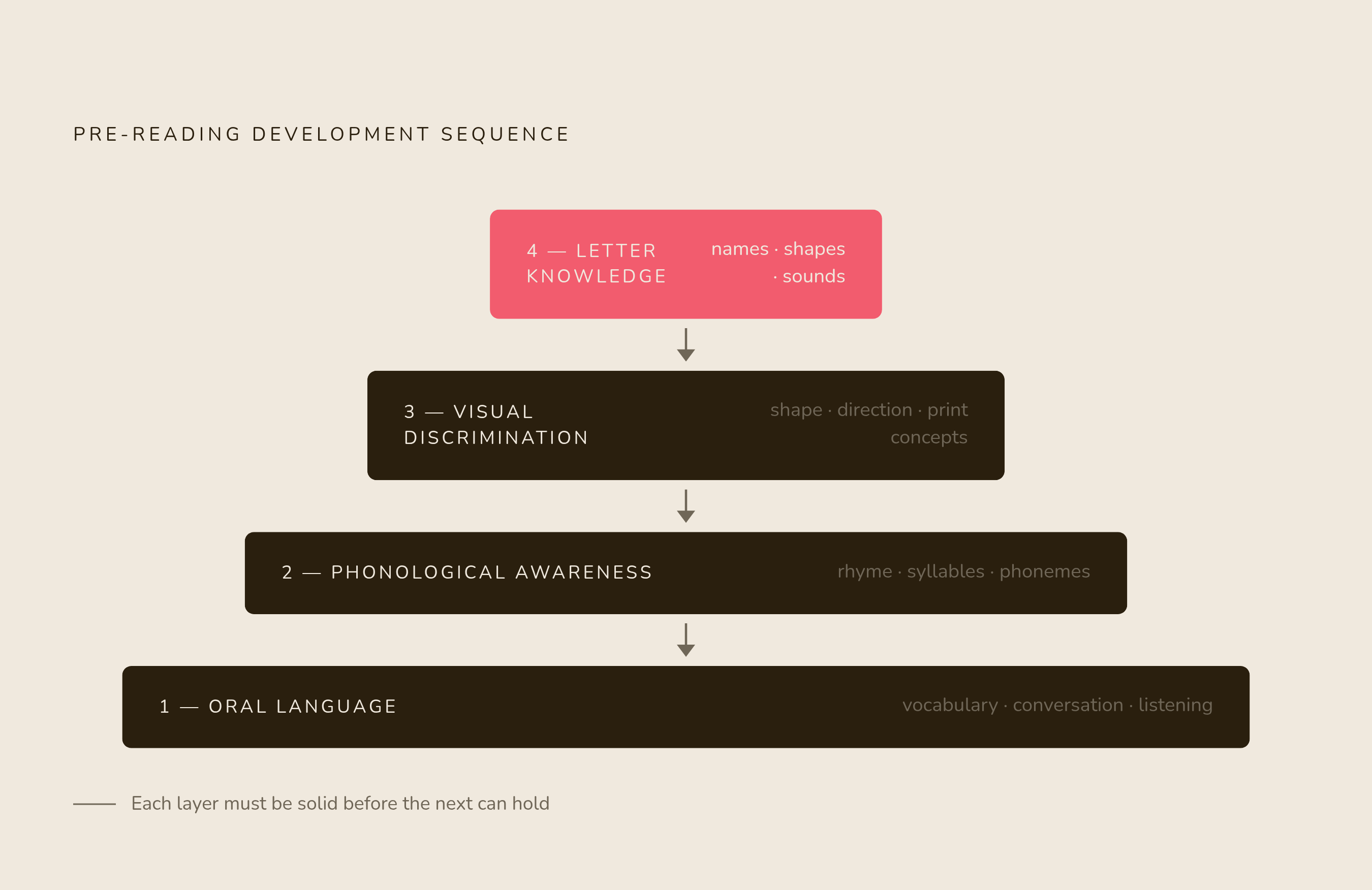
Pre-reading readiness rests on four layers that build in order: oral language, phonological awareness, visual discrimination and print concepts, and letter knowledge. Formal phonics instruction only works once those layers are in place; capable, motivated children stall out when they're handed letter-sound drills too early. The sections below walk through each layer and what builds it, closing with what parents can actually do at home.
Why phonics instruction sometimes fails even motivated children
A child sits with a flashcard, staring at the letter "m," and nothing happens. The teacher says the sound. The child repeats it. Five minutes later, the same card produces the same blank look. It's usually a readiness problem, far more common than most parents realize, and not a motivation or intelligence problem.
Phonics asks a child to do several things at once: hold a letter shape in memory, match that shape to a sound, blend sounds together into a word, and track the whole sequence left to right across a page. Each of those steps depends on a foundation that has to be built beforehand. When that foundation is thin, phonics doesn't fail because the child isn't trying. It fails because the scaffolding underneath isn't finished.
A lot of that early push comes from outside the child. Testing schedules, classroom timelines, and the pressure of watching other children's progress can all push kids into structured phonics before their listening, sound awareness, oral language, and visual processing have caught up. Educators who work closely with early literacy describe this as a real and common pattern: children get expected to be ready for the system, instead of the system adjusting to meet the child where they are.
Starting phonics in a classroom is the finish line of a long developmental process, not the starting gun. The work that makes phonics stick happens months, sometimes years, before a child ever sees a worksheet. Some children do seem to pick up phonics almost immediately, with little obvious preparation beforehand, and that observation is accurate as far as it goes. What's actually happened in those cases is that the child absorbed the pre-reading skills already, through a language-rich home environment, conversation, songs, and books, long before anyone called it instruction. The skills were never optional. They were just invisible.
The developmental sequence that leads to phonics readiness
Pre-phonics refers to the skills and activities that prepare a child for formal phonics instruction: listening, sound awareness, and oral language, developed before any letter-sound relationship enters the picture. These skills don't arrive in a random order, and they don't develop independently of each other.
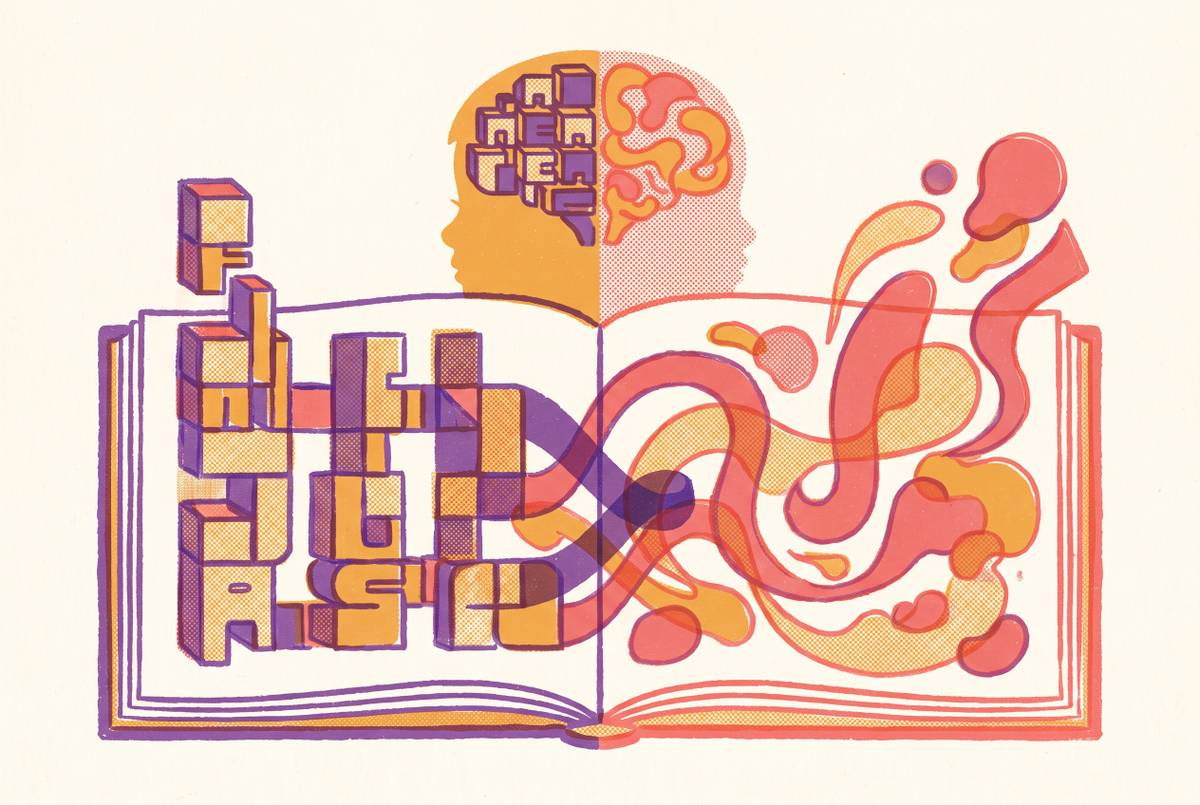
Oral language comes first. Spoken vocabulary and the habit of listening closely form the base that everything else sits on. Phonological awareness builds directly on top of that spoken language foundation, since a child has to be comfortable with how words sound before they can start noticing the sound patterns inside them. Visual discrimination and print concepts come next, training the eye and the hand to handle the physical business of reading and writing. Letter knowledge is the final bridge, the point where everything built so far connects to the formal phonics instruction that follows.
The sections ahead walk through each of these layers in order, because skipping one or rushing it tends to undermine everything built on top. A child who hasn't developed solid listening skills will struggle to hear similar sounds as distinct from each other. If a child can't yet discriminate between sounds, they will struggle to map those sounds onto letters later, no matter how many times the letters are reviewed. None of this is a gauntlet children need to survive. It's a natural sequence, and it follows the order in which the brain organizes perception: auditory first, then visual, then symbolic.
Oral language as the root system every other skill grows from
Phonics is a system for mapping sounds a child already knows onto written symbols. That means a child's spoken language has to come first, and the richer it is, the more phonics instruction has to work with later.
You build reading and writing on solid speaking and listening skills. Children should be confident, practiced communicators in both before formal phonics instruction begins. Listening itself takes development. Kids need practice telling apart environmental sounds, recognizing the sounds around them, and eventually picking out syllables and individual sounds inside words, and all of that feeds directly into blending and segmenting later on.
Picture a family at the dinner table, narrating the day back and forth: what happened at the park, what the dog did, why the sky looked different on the walk home. That kind of back-and-forth, sometimes called serve-and-return conversation, builds vocabulary and trains a child to pay close attention to language, both of which feed straight into phonological awareness. Bedtime storytelling does similar work, especially when an adult expands on what a child says.
Vocabulary matters here in a very concrete way. A child who decodes a word they've never heard spoken gets nothing out of it, even if the decoding itself is technically correct. The word comes out as sound without meaning. The more words a child already knows and uses, the more phonics has to connect to once decoding instruction starts.
Emotional readiness belongs in this conversation too. A child who feels settled, curious, and confident engages with language more readily and retains more of it, which makes emotional readiness a real precondition for the cognitive work that listening and sound awareness require. For both home and classroom, the practical move is building a communication-friendly environment, one that treats talk and listening as central, not just something that happens around labeled bins and wall displays.
Phonological awareness: learning to hear the architecture of spoken words
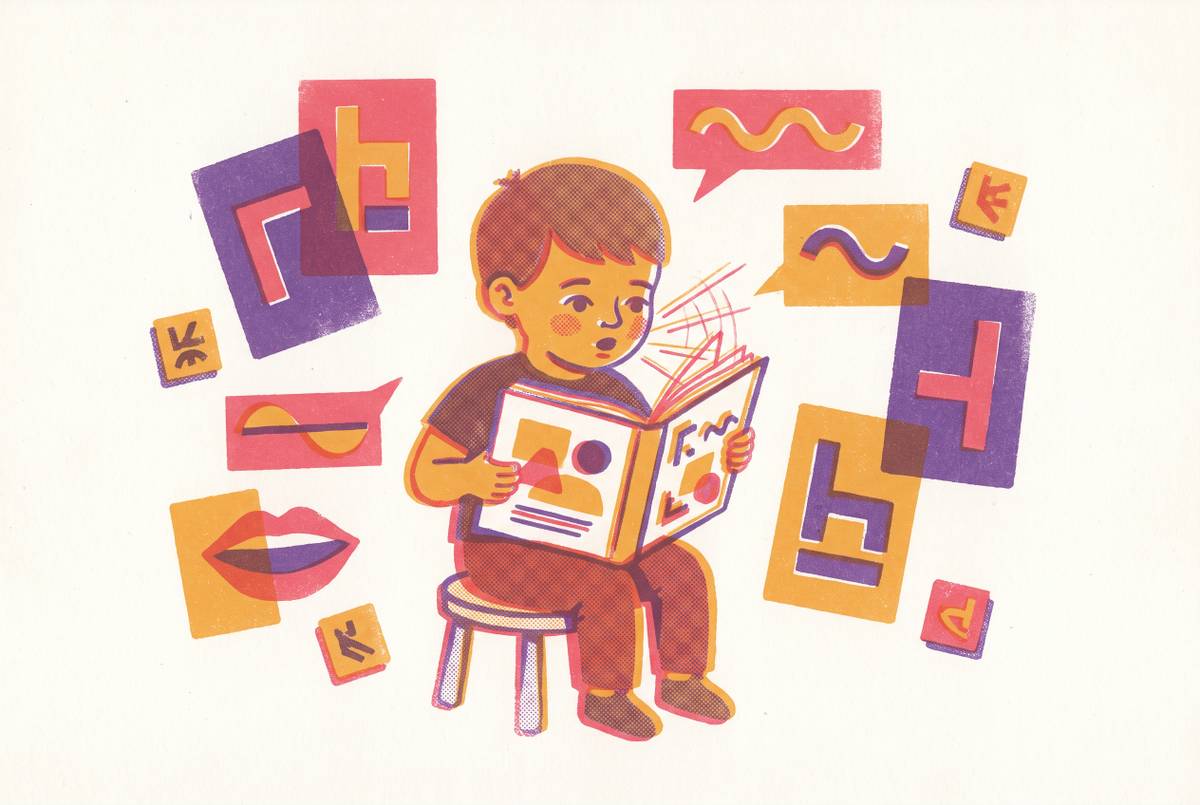
Phonological awareness is the ability to hear and work with the sound structure of spoken language, and it's the gating skill for everything phonics will later ask a child to do. A child who can't yet hear that "cat" and "hat" rhyme, that "sunshine" is actually two smaller words stuck together, or that "dog" starts with a distinct sound isn't ready to start attaching those sounds to letters.
This entire skill set develops through listening and speaking, with no print involved. Research shows that connecting phoneme awareness to letters and print later on speeds up its development significantly. Phonological awareness needs to come first and get established on its own terms.
It covers a range of sub-skills, and they tend to develop in a rough order of difficulty. Rhyme recognition comes first (noticing that "bat" and "cat" sound alike). Syllable awareness follows (clapping out "ba-na-na" as three beats). Onset-rime awareness comes next (hearing that "c-at" and "s-at" share an ending). Phonemic awareness, the most granular skill of the group, comes last: hearing and manipulating individual sounds inside words. Oral blending and segmenting, hearing "c-a-t" as a spoken sequence and assembling it mentally into the word "cat," is a phonemic awareness skill, and children should practice it well before they ever see the letters on a page.
Research consistently ranks phonemic awareness among the strongest predictors of later reading and spelling success. The link between phonemic awareness and reading acquisition stands as one of the most well-established findings in the whole field of beginning reading research.
Nursery rhymes and songs do real cognitive work here, not just entertainment. Research shows a relationship between how well a child knows nursery rhymes and their reading and spelling ability at age eight. The rhythm, pitch, repetition, and rhyme in those songs train sound discrimination and pattern recognition in a way that feels like play but functions like practice.
Auditory discrimination, telling apart sounds like /f/ and /th/, or noticing that a drum and a bell make different sounds, is the earliest form of this awareness, and it starts in infancy through ordinary sound exploration around the house. Auditory memory tends to be the hardest piece of the whole stack. A child might correctly identify all three sounds in "cat" one at a time and still fail to blend them into the word, because holding a sequence of sounds in working memory long enough to combine them is a separate skill. That gap won't close through phonics drills alone. It needs direct practice with sequencing and blending.
Visual discrimination and print concepts: training the eye before introducing the alphabet
Picture a child staring at "b" and "d," flipping between them, unable to say with confidence which is which. That confusion is one of the most common signs that visual discrimination hasn't fully developed yet, and it has nothing to do with intelligence or effort. Before a child can connect a sound to a letter, they need to see that letter clearly as its own distinct visual object, which depends on visual discrimination, visual memory, and a working understanding of how print functions on a page. None of that develops automatically just because a child is exposed to books.
Visual discrimination starts early, through shape sorters, puzzles, and pattern-matching games. These activities are early training for the exact visual system that will later need to tell "m" apart from "n. Visual memory is a separate and equally important piece: the ability to remember what's been seen before, not just distinguish it in the moment. A child who correctly tells "m" and "n" apart on Tuesday and mixes them up again on Thursday has a visual memory gap, not a discrimination problem, and the two call for different kinds of practice.
Directionality, the left-to-right tracking that English print requires, is a print concept that needs to be in place before decoding can proceed correctly. Print concepts also cover the basics: that marks on a page carry meaning, that words are separated by spaces, that a book has a front and a back. Children who've been read to extensively tend to pick these up without direct teaching, but that shouldn't be assumed for every child. Sound walks, paying attention to environmental print like signs and labels, and mark-making all build the kind of attention to visual detail that print concepts rest on.
Physical development and fine motor skills as quiet prerequisites
Reading and writing readiness has a physical side that gets overlooked constantly. Children need the postural strength to sit still and pay attention, and eventually they need the fine motor control to form letters by hand. The good news is that the activities which build those capacities don't look anything like academic work. They look like play.
From birth onward, children build physical skills that eventually support reading and writing. Holding the head up, sitting, crawling, walking: all of it builds the core strength and coordination that later supports sitting still and attending for sustained stretches. Fine motor development matters just as much. Threading beads, squeezing play dough, using tweezers, scribbling and mark-making all build the hand and finger muscles needed for writing later on. Writing and reading actually reinforce each other once that strength is in place. Children who can physically form a letter tend to remember it better than children who've only looked at it.
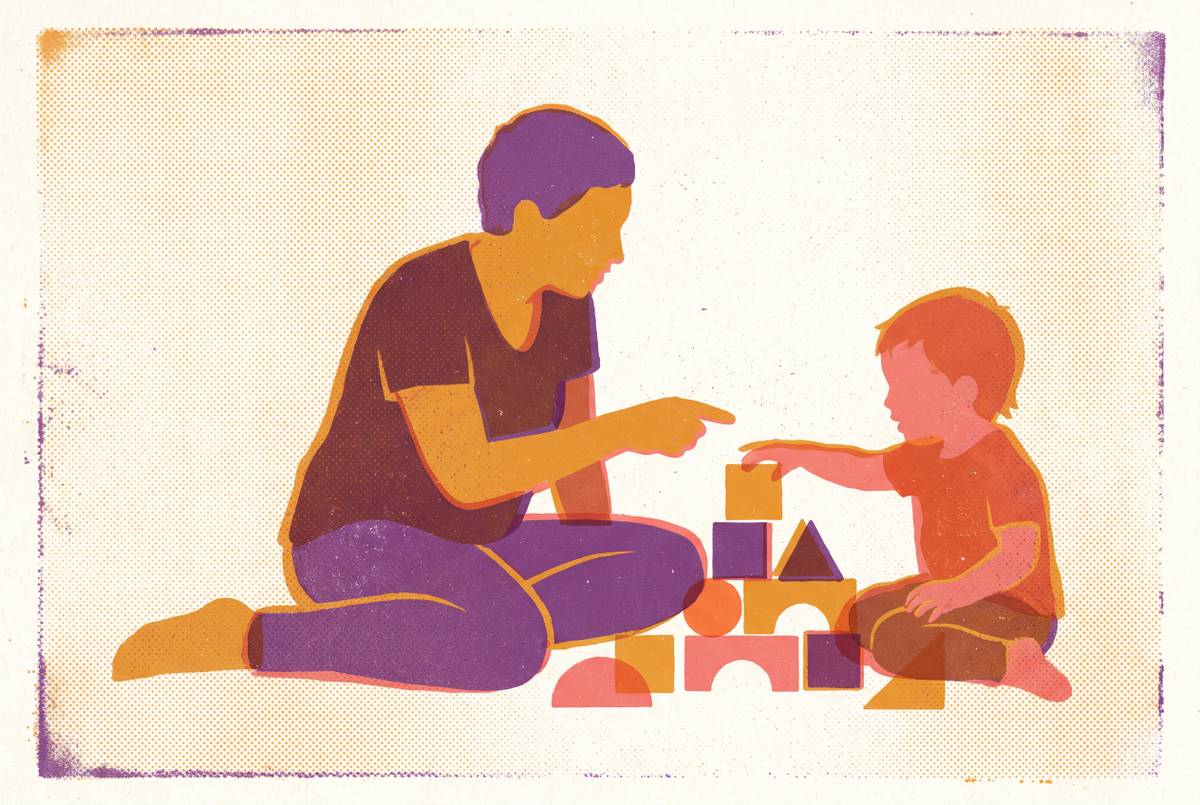
Fine and gross motor activities are a real part of pre-phonics preparation, right alongside listening and sound awareness. That means outdoor play, climbing, building with blocks, drawing, and crafting are part of reading readiness, doing quiet work in the background while a child just thinks they're playing.
Letter knowledge: where pre-reading becomes phonics readiness
Letter knowledge sits at the junction between pre-reading and phonics. It means knowing letter names, recognizing their shapes, and starting to connect them with their sounds. This is the final pre-reading skill, and it only holds up well once oral language, phonological awareness, and visual discrimination are already in place to support it.
Letter knowledge at this stage is not the same thing as phonics, and parents mix the two up constantly. At this point, a child recognizes that a given shape has a name and represents a category of sound. Systematic letter-sound decoding, the actual mechanics of phonics, comes after that foundation is laid.
The evidence for structured letter exposure during this window is solid. A randomized trial from Learning4Kids found significant gains in letter knowledge and letter-sound identification among children who received a literacy app intervention, so targeted, structured exposure to letters during the pre-phonics window produces measurable results. Digital, game-based phonics instruction has also been shown to build print knowledge in pre-readers considered at cognitive risk for dyslexia, so children whose profile suggests future difficulty can still benefit from structured letter exposure before formal phonics starts, as long as the approach is well-designed.
Researchers at Sapienza University built an assessment tool called the DAP-T, and it tests letter knowledge alongside phonological awareness and notational awareness in children as young as three. That tool reflects a broader research consensus: these skills are measurable, and developmentally meaningful, well before a child ever sets foot in kindergarten. Letter knowledge also includes notational awareness, understanding that letters form a specific symbolic system distinct from numbers or pictures, which is itself a conceptual achievement built on the print concepts established earlier. A child who arrives at this point with strong oral language, developed phonological awareness, trained visual discrimination, and emerging letter knowledge is genuinely ready for systematic phonics instruction, not just old enough for it.
Tools like Ello assess a child's actual pre-reading readiness through real-time listening and adaptive instruction, which helps make sure phonological awareness, sound discrimination, and oral language foundations are in place before formal phonics begins. The goal is a child who enters phonics instruction with the cognitive scaffolding already built, rather than one expected to build it under pressure from flashcards and timelines.
Building each layer of the foundation at home
Parents asking how to prepare a toddler for kindergarten, or looking for the best way to teach a 4-year-old letters and numbers before school starts, don't need a curriculum. The most effective activities are ordinary, low-cost, and already woven into daily life. What matters is consistency and understanding which layer each activity is actually building.
Oral language grows through back-and-forth conversation: narrating a grocery store trip out loud, asking a child to describe what they see on a walk, telling stories at bedtime, and expanding on what a child says to build on their grammar. Phonological awareness grows through songs and nursery rhymes, chosen for their rhythm and repetition, along with simple games that ask a child to clap out syllables or spot words that rhyme, all without a single letter in sight. Visual discrimination and print concepts grow through shape sorters, puzzles, and pattern games, paired with pointing out letters and signs during everyday errands and reading books together while tracking the print left to right with a finger. Physical development grows through climbing at the playground, building with blocks, drawing, and manipulating play dough or tweezers, each one quietly strengthening the hand and body a child will eventually need for writing.
Letter knowledge can start once the earlier layers are solid, through games that connect letter names to their shapes and sounds, introduced gradually. Conversation and responsive listening are the base that everything else runs on, and children benefit enormously from sustained, one-on-one attention to their own voice and the way they use language, the kind of steady, responsive listening that an adaptive AI teacher like Ello can offer in real time, reinforcing vocabulary and building the habit of paying close attention to how words actually sound. None of these activities require a worksheet or a formal lesson. They require time, attention, and an understanding of what's actually being built, one layer at a time, so that by the time formal phonics instruction arrives, the child is ready for it.
Sources
- What is Pre-Phonics and What Can I Do at Home to Support My Child? - Young England Kindergarten
- Digital Game-Based Phonics Instruction Promotes Print Knowledge in Pre-Readers at Cognitive Risk for Dyslexia
- Pre-Reading Skills
- Studies Weekly: Phonemic and Phonological Awareness
- Phonological Awareness as the Foundation of Reading Acquisition in Students Reading in Transparent Orthography
- Phonemic Awareness: Yea, nay?
- Cutting It Too Fine? The Factor Structure of Fine Motor Skills From Ages 5 to 10 Years
- Psychometric Properties of the Pre-Literacy Test: Assessing Literacy Readiness Skills