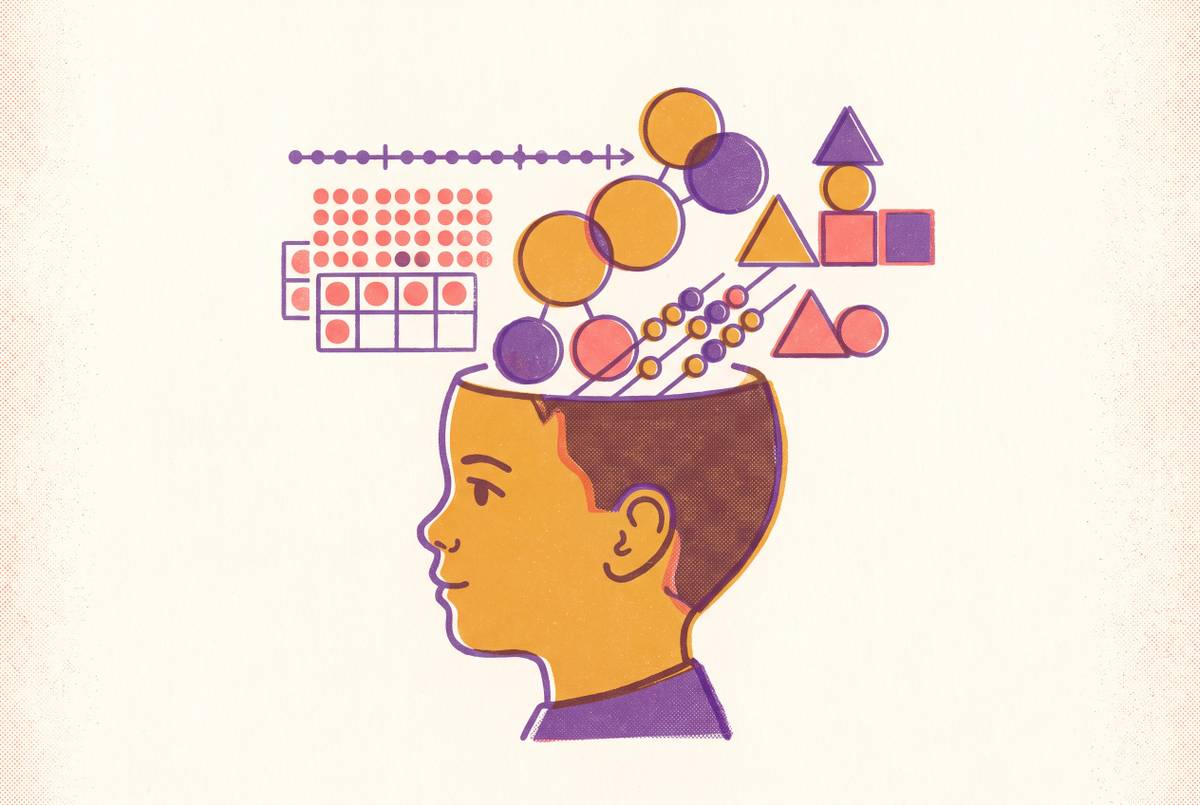
Math Anxiety in Young Children and How to Prevent It
Parents' own math anxiety quietly teaches children to fear numbers before school even starts.
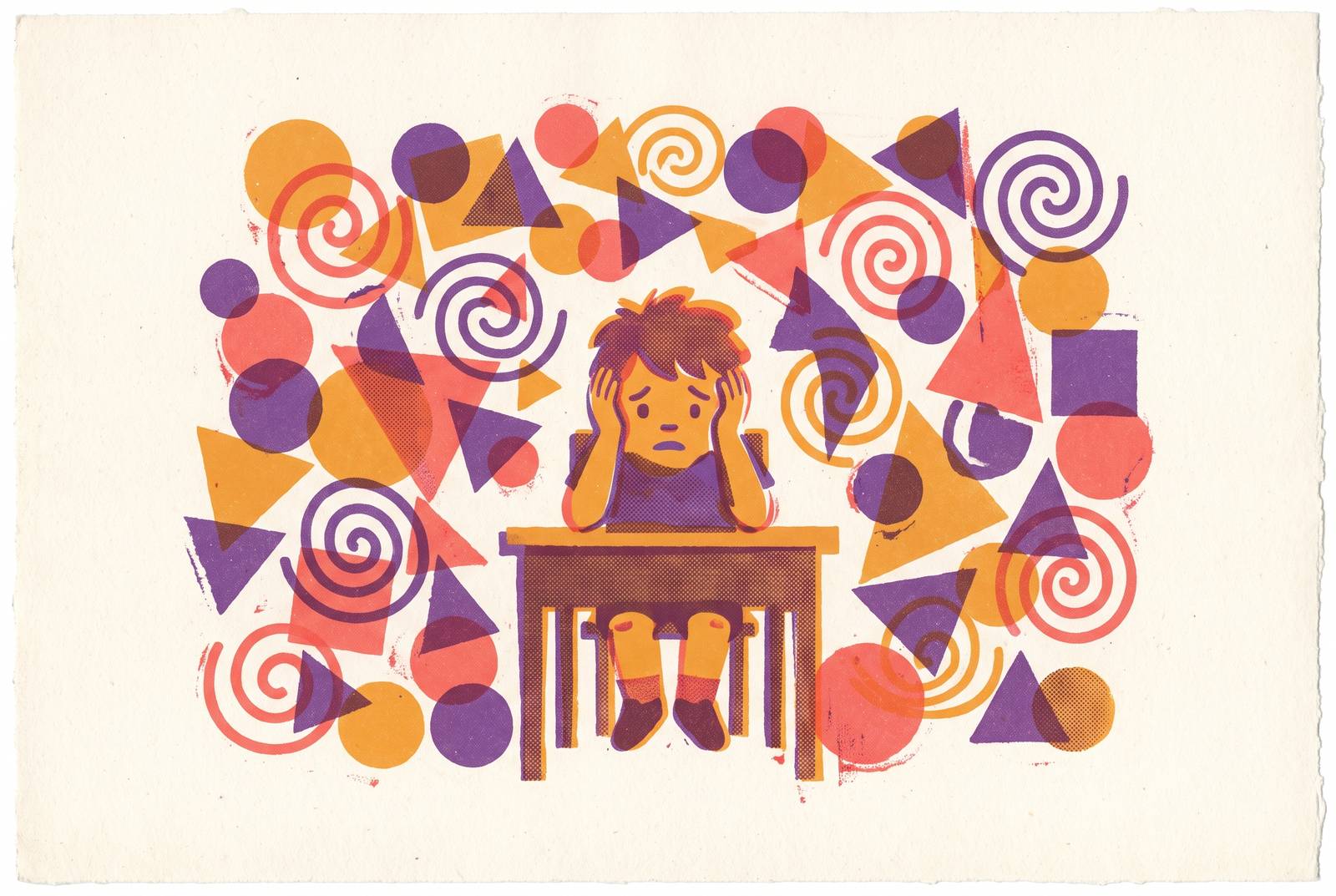
Math anxiety in young children is a loop of fear, difficult experiences, and avoidance that can begin as early as kindergarten. Adult attitudes can feed that loop, but they can also interrupt it. Parents have real power to prevent math anxiety by changing both how numbers enter daily life and the feelings that come with them.
What math anxiety actually is, and why it is not the same as disliking math
NCFR's 2026 policy brief defines math anxiety as intense feelings of tension, fear, or helplessness in response to mathematical tasks. Math anxiety is a response tied specifically to math. A child may feel at ease in other parts of life and still feel distress when faced with a word problem or an everyday task that uses numbers.
That distress interferes with working memory and concentration, making it harder to hold information in mind and use it. The child may know how to solve the problem but struggle to reach that knowledge while anxious. Researcher Molly Jameson describes the experience as “white noise in the brain”. Sometimes anxiety blocks access to knowledge that is already there, so a wrong answer alone does not explain what happened.
Parents may notice stomachaches, a racing heart, fear, frustration, or avoidance of math-related tasks. Frustration by itself is not the dividing line, but fear and avoidance around numbers deserve attention. NCFR's 2026 policy brief estimates that roughly one in five people experiences math anxiety, including children as young as 5.
How early math anxiety takes hold — the self-reinforcing loop that solidifies before third grade
Math anxiety builds through a feedback loop rather than appearing as a fixed limit on a child's ability. Biological tendencies, how well a child does early on, how they feel, and avoidance can all feed one another. A hard experience brings fear, and that fear makes it harder to try again. Avoidance then becomes the engine of the loop. Each time a child skips math, they lose a chance to practise, and the skills they miss out on give them more reason to fear it.
Math's clear right-or-wrong answers can sharpen this process. A child who answers incorrectly in front of others may experience the mistake as a verdict. NCFR's 2026 policy brief identifies timed tests and being called on and getting an answer wrong as classroom triggers. Under time pressure, children may forget concepts they can handle at home. The experience can make math feel threatening even when the underlying work is within reach.
A 2026 study of first graders published in Frontiers in Education found that math anxiety selectively impaired number production and comprehension while leaving number sense relatively intact. First grade is not too early for the loop to be operating. Still, a child who struggles early on may not go on to have lasting fear. What children see in the adults around them can help keep the loop going.
How adult math anxiety travels to children — and why parents often do not see it happening
Children pick up adults' feelings about math from how they act, the attitudes they show, and what they avoid doing. Transmission does not require a parent to tell a child that math is frightening. An anxious parent may simply stay with basic counting and avoid comparing sets or labeling larger quantities. That changes both the child's opportunities to learn and the emotional setting in which learning happens.
Parents may think about whether they offer math activities without noticing the anxiety that shapes those activities. NCFR's 2026 policy brief links the home numeracy environment with children's skills specifically when parents feel less anxious about mathematics. Providing opportunities matters, but it does not tell the whole story. The parent's emotional relationship with math is part of the environment too.
Teacher practices and beliefs offer another route for anxiety to travel, so this is not a problem unique to parents. The wider culture also gives adults permission to treat math as an ability people either have or lack. Early education has historically emphasized literacy over numeracy, reinforcing that difference in expectations. NCFR's 2026 policy brief notes that girls tend to report higher math anxiety than boys even when performance is comparable. Cultural messages therefore matter as well as what happens at home, but home remains a place where parents can change the message.
Why the early years are the highest-leverage window for prevention
Early math skills at kindergarten entry are among the strongest predictors of later academic achievement. The foundation children build before school gives them skills to draw on as the work gets harder. When fear interferes with that foundation, learning and confidence can both suffer. Prevention means addressing that relationship before avoidance becomes an established response.
NCFR's 2026 policy brief says children's feelings about math form before formal instruction starts and that it is critical to help early. It also places support for the mental health of families, caregivers, and educators within prevention. That makes the home a central setting for prevention. If adults wait for school to solve the problem, they miss what is already shaping how the child feels about math.
Helping early matters for families whether or not they want to give their children an academic head start. Children whose mothers have less education or who have a migration background tend to have lower early numeracy at baseline, and these early gaps can grow through primary school. Informal settings on their own do not ensure that children learn as much as they could. What happens within them matters. The contrast between treating reading difficulty as something to teach through and math difficulty as evidence of limited ability shows why the response at home deserves attention.
What parents can actually do at home — and why quality of engagement matters more than quantity
The practical goal is to make number talk more useful and less threatening. Simple number talk includes counting and saying how many there are in small quantities. More complex number talk includes comparing the size of two sets, labeling larger sets of objects, and discussing relationships between quantities. Research points to this richer talk as a possible driver of gains in number understanding, rather than treating every math activity as equally helpful.
Children can count their steps as they walk and compare prices or quantities while shopping. When children cook, they have a reason to measure ingredients, and when they play with blocks, they use spatial reasoning. These activities embed math in something the child is already doing, encouraging active involvement without the performance pressure that can feed fear.
However, changing activities is only part of the job. Cosso et al.'s 2023 research found that a better home numeracy environment went with stronger numeracy skills in children when parents felt less anxious about mathematics. An Italian intervention program delivered by community pediatricians improved parents' provision of math activities at home but produced no direct effect on children's early numeracy scores. That result shows why more activity cannot be assumed to produce better learning. Giving parents information is not enough to address the emotional side of their engagement.
Parents can show how to work calmly through a problem without taking uncertainty as proof that they cannot do math. Showing that a problem can be worked through teaches a different lesson from declaring a lasting weakness in math. Deep breathing, positive self-talk, and mindfulness activities have been shown to help children cope when they feel anxious during tasks. They help children stay calm but do not replace building competence. When children avoid math less and take a more active part in it, they have more chances to learn without letting fear decide which tasks they try.
What to look for in a math app — and what makes the difference between a tool that teaches and one that drills
A math app should support this kind of engagement. The app should help a child understand as well as collect their answers. Research published in the British Journal of Educational Technology identifies a combination of explanatory feedback, motivational feedback, and programmatic levelling as a necessary condition for enhanced learning outcomes with math apps. Explanatory feedback says why an answer is right or wrong. Levelling helps match the challenge to the child's performance instead of sending every child through the same fixed sequence regardless of understanding.
Repeated guessing without re-teaching or adjusted difficulty is a warning sign. A child can keep giving answers while still misunderstanding what led them to get an answer wrong. Rote arithmetic practice without problem-solving can leave children unable to apply a skill in a new situation. That gap matters because a later failure to use the skill can feed the very fear the tool was meant to reduce.
The level of challenge also matters. Work that is too easy may not engage the child, while work that is too hard can confirm the fear of failure. Genuine adaptive technology adjusts difficulty in real time based on what the child is doing. But the label on a tool is less important than its teaching design. Parents should look for a response to difficulty that helps the child learn.
AI does not remove these requirements. Studies on generative AI report positive engagement, but evidence of direct achievement gains varies with intervention design and duration. Shorter interventions and those without sustained teaching support yield smaller effects, so brief, passive use is unlikely to make much difference. A well-designed tool should also build independence, with children becoming able to solve and explain math without its prompts. Apps work best as a complement to adult interaction and real-world exploration, because they cannot replace the relationship through which adults help children feel safe enough to learn.
Why interrupting the anxiety loop early protects more than math
Adults with math anxiety tend to choose easier, lower-reward problems over harder ones. Over time, avoidance can extend to advanced classes and careers that require mathematical skills. NCFR's 2026 policy brief identifies math anxiety as a barrier to STEM career pursuit and connects it with decreased math achievement. The concern is not one bad result but a pattern that narrows what a person feels able to attempt.
People in STEM careers and those who completed graduate school report lower math anxiety than those with less education. This is not a simple one-way story in which anxiety determines a child's future. Anxiety can reduce achievement, while weaker achievement can further limit the options people believe are open to them. The effects also reach everyday tasks that adults do, such as managing medication, budgeting, and financial planning. Low numeracy is associated with poor financial well-being, so keeping children engaged with numbers has value beyond school.
None of this makes an anxious kindergartner's future fixed. The loop has identifiable entry points, including adult modeling, early experiences, and avoidance. Those are the same places where parents can help change its direction. Calm, meaningful engagement at the kitchen table before kindergarten is not just preparation for homework. It can help a child keep approaching numbers rather than retreating from them, holding open a door that fear might otherwise close.
Sources
- Addressing Children’s Math Anxiety Through Family-Centered Mental Health Policies
- Frontiers
- Parental mathematics anxiety is related to children’s mathematical development in preschool and the first school years - ScienceDirect
- How to solve for math anxiety? Studying the causes, consequences, and prevention methods needed
- Individual, interpersonal and sociocultural contributors to maths anxiety in children
- Predictors and outcomes associated with early math anxiety: Parental factors, working memory and math performance - ScienceDirect
- Parent math anxiety and children’s math success: The role of autonomy-supportive and controlling parenting behaviors - ScienceDirect