Adaptive Learning Apps vs Fixed-Curriculum Learning Apps for Kids
Adaptive apps detect actual understanding; fixed apps move every child through the same sequence.
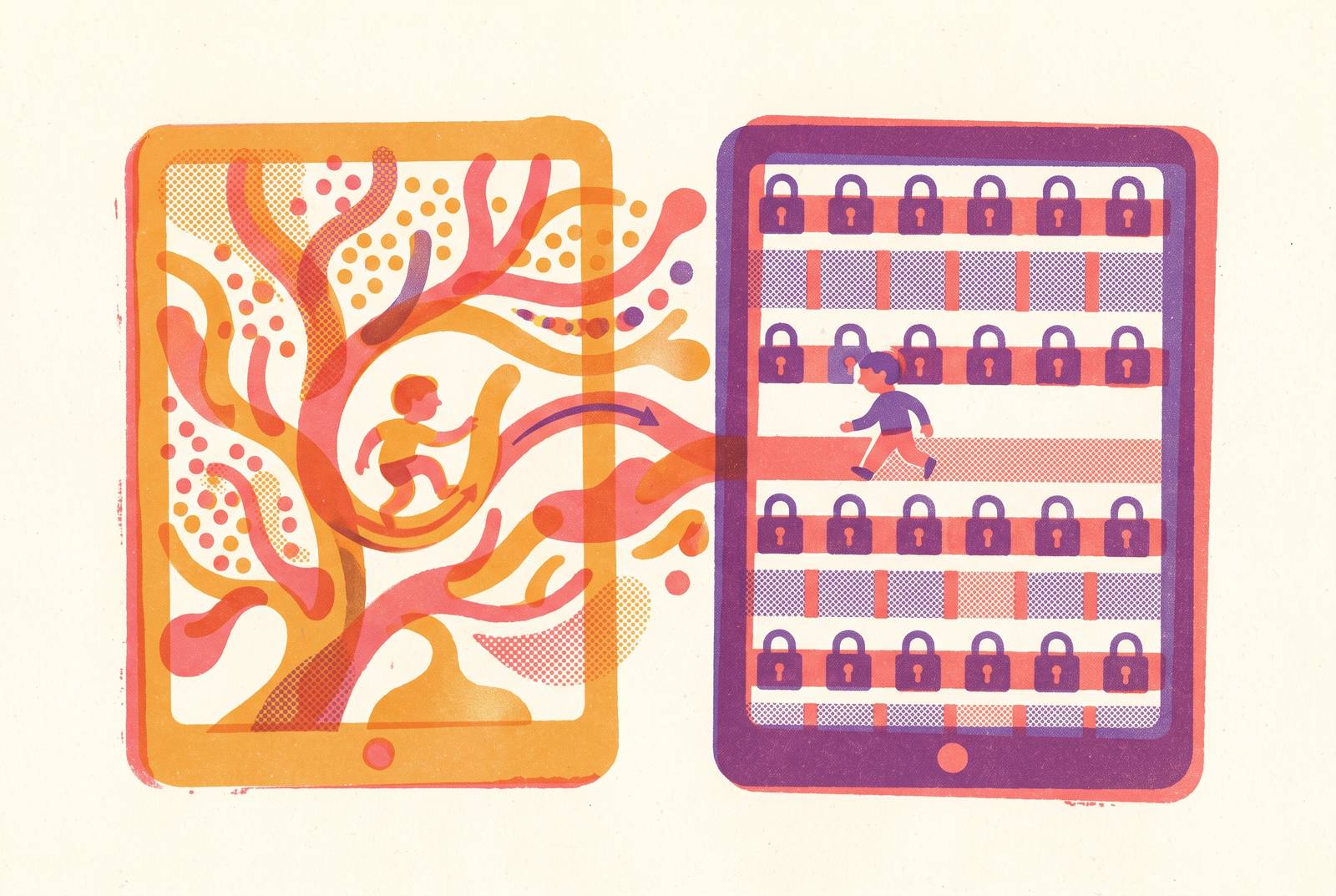
The real difference between an adaptive learning app and a fixed-curriculum app has nothing to do with speed. It comes down to whether the app can tell what a child actually understands at a given moment, and whether it can change what happens next based on that information. A fixed-curriculum app moves every child through the same material in the same order, regardless of whether a child has mastered a skill or is simply guessing their way through it. It has no way to tell the two apart. An adaptive app, by contrast, works on a loop: it watches how a child performs, reads that performance as a signal, and routes the child toward content that matches what they've actually shown they can do, not what their age or grade level assumes they should be able to do.
That difference has real weight for an individual child, not just in theory. A child who already understands a concept and gets stuck repeating it in a fixed sequence is losing time that could go toward something new. A child who hasn't mastered a prerequisite but gets pushed forward anyway is being set up to struggle with everything built on top of it. Neither of these is a minor inconvenience. They're the direct result of a design choice: whether the app can detect understanding or only track completion. Before deciding whether adaptive or fixed is the better fit for a child, it helps to understand what both types of app are actually required to get right in the first place, starting with what the science of reading demands.
What reading science requires any app to get right
Any app that teaches a child to read, adaptive or fixed, answers to the same body of research, and that research is specific about order, not just content. The science of reading is built around five components: phonemic awareness, phonics, fluency, vocabulary, and comprehension. These five reinforce each other rather than functioning as a checklist to move through once and forget, but they still follow a developmental logic that instruction has to respect.
Phonemic awareness, the ability to hear and manipulate individual sounds inside spoken words, comes first because phonics depends on it. Phonics then connects those sounds to letters in a planned way, and that connection is what lets a child decode words accurately. Once decoding becomes automatic, a child stops spending all their mental effort on sounding out words and can start paying attention to what the words actually mean. That shift is what opens the door to fluency, and fluency is what makes comprehension possible. Vocabulary and comprehension sit on top of that foundation. Skipping a rung means the floors above it don't hold.
Research from 2025 confirms that systematic phonics works by introducing skills in a planned sequence, moving from simple letter-sound patterns to more complex ones, with children practicing blending sounds together before they're handed a new pattern to learn. That sequence only works if the instruction knows where a given child actually stands inside it. A fixed-curriculum app can be built on a genuinely strong, evidence-aligned sequence and still fail a child who isn't where that sequence assumes them to be. And an adaptive app that skips systematic phonics in favor of flashy engagement features is worse than either option, because it's getting both the sequence and the detection wrong at once.
Early math development
Early math follows the identical logic. Skills like recognizing numbers, understanding that a number represents a quantity (cardinality), handling basic operations, and reasoning about space and shape all build on each other in order. A child who's stuck on one rung of that ladder won't benefit from instruction aimed at the rung above it, no matter how well-designed that instruction is.
That has a direct consequence for how a math app should be built. An app that can figure out exactly where a child has gotten stuck in that sequence, and aim instruction at that specific gap, has a real structural advantage over an app that marches every child through the same counting drills regardless of where they individually stand. A peer-reviewed study of My Math Academy, an adaptive, game-based math app built for children from pre-kindergarten through second grade, found that students using the platform made significant learning gains compared to a control group that didn't use it. That study stands out because it's one of the few adaptive math apps for young children with peer-reviewed evidence behind it showing this kind of effect. The lesson here is a general principle about how young children build academic skills: any app, in any subject, has to be judged on whether it can detect where a child actually is, not just on how well it was designed in theory.
What most adaptive apps adapt
Calling an app "adaptive" doesn't mean much on its own, because most apps that use the label are adapting difficulty and pace, not the method of teaching itself. They deliver the same kind of lesson every time and just turn a dial, making it harder or easier depending on whether the last answer was right or wrong.
That's a weak signal to build a whole system around. A child can get an answer right by guessing, by recognizing a pattern in the app's interface, or by having memorized the answer without understanding the concept behind it. A system that only tracks correct versus incorrect has no way to tell these apart. Research on adaptive platforms points to a related problem: these systems depend on well-defined learning objectives and structured assessments to function, which limits where they can be applied, and the inner workings of their recommendation algorithms are often opaque enough to raise real concerns about instructional bias. An app can route a child down the wrong path with complete confidence and no way for anyone to catch it.
A platform that keeps steering children toward easy wins builds short-term confidence but not the kind of resilience that comes from working through real difficulty. Fixed-curriculum apps, somewhat ironically, can end up forcing children through exactly that kind of productive struggle simply because they don't let anyone opt out of it. But that objection points to a design flaw inside adaptive systems, not a reason to prefer a system that can't detect misunderstanding. A well-built adaptive system can deliberately include challenge. Only a system that can detect misunderstanding can know who actually needs that challenge.
Real-time voice-based detection and the ceiling it raises on adaptive instruction
For early readers between ages 4 and 9, the richest signal available is whether that child can actually say a word out loud, how clearly they pronounce it, how smoothly they read it, and where they hesitate. An app that listens to a child read captures information a tap-based interface simply has no access to.
Getting speech recognition to work reliably for children is harder than building it for adults. Children's speech is more variable, more prone to stops and restarts, and harder for a model to learn from. Even so, research into transcribing children's speech shows that models fine-tuned for this purpose can perform reliably at the level of individual words and phrases, reaching 98.3% precision in identifying correctly pronounced recordings on the JASMIN dataset. That level of accuracy makes real-time voice-based assessment a workable tool for teaching, not just a research curiosity.
When an app can hear a child read aloud and catch, in the moment, where decoding breaks down, which sound got missed, where fluency stalled, where one word got swapped for another, it's applying the same early-identification principle reading science treats as essential: finding the children who need help and targeting the right gap before they fall further behind. That's the gap between a reading tutor that's genuinely adaptive and one that's just a well-organized quiz. One knows what the child said. The other only knows what the child tapped. Ello's real-time voice-listening capability is a concrete example of this distinction in practice: by picking up on hesitation, pronunciation accuracy, and fluency in a child's spoken responses, it can tell not just whether an answer was correct, but whether real understanding is actually there, and it adjusts instruction moment to moment in a way no tap-based app can match.
The capabilities and limits of AI-powered instruction for young children
AI-powered instruction offers something real: individualized feedback at a scale no single teacher or parent could sustain on their own, available whenever a child wants to use it. But the risks that come with AI in children's education are specific, documented, and worth taking just as seriously as the benefits.
Two risks matter most for children between ages 4 and 9. The first is hallucination, where an AI system produces false information, and a young child, who doesn't yet have the critical reading skills to question what they're told, is likely to accept it as fact simply because an adult-sounding voice said it. The second is emotional over-reliance. Young children are developmentally wired to treat things that talk back to them as if they were alive, and an app that responds conversationally can end up being treated as a source of comfort or companionship by a child, even though the system has no actual understanding of that child. A 2025 systematic review of AI interventions for students with learning disabilities found positive outcomes across all eleven studies it covered, spanning dyslexia and other learning differences. Still, the research base behind these findings is thin and made up mostly of short studies run over short periods, so any confidence in these tools should be measured against how limited that evidence still is.
What separates a responsibly built AI teaching app from a general AI tool that's simply been pointed at children comes down to three things. The curriculum has to be purpose-built and grounded in evidence, not a general-purpose language model repurposed for education. The reading content, the texts and phonics sequences a child actually sees, needs to be written by people, not generated on the fly, so there's no risk of the system inventing something false. The app should be designed to be treated as a teaching tool, not as a friend or emotional support. An app like Ello that grounds its reading curriculum explicitly in the science of reading, respecting the sequence from phonemic awareness through phonics to fluency and comprehension, can adapt its teaching within that sequence to wherever a given child actually stands, instead of pushing every child forward based on an assumption tied to their age or grade.
Evaluating learning apps against what the evidence requires
What matters is a set of more specific questions about what the app can detect, what it does with that information once it has it, and whether the curriculum underneath is actually grounded in evidence.
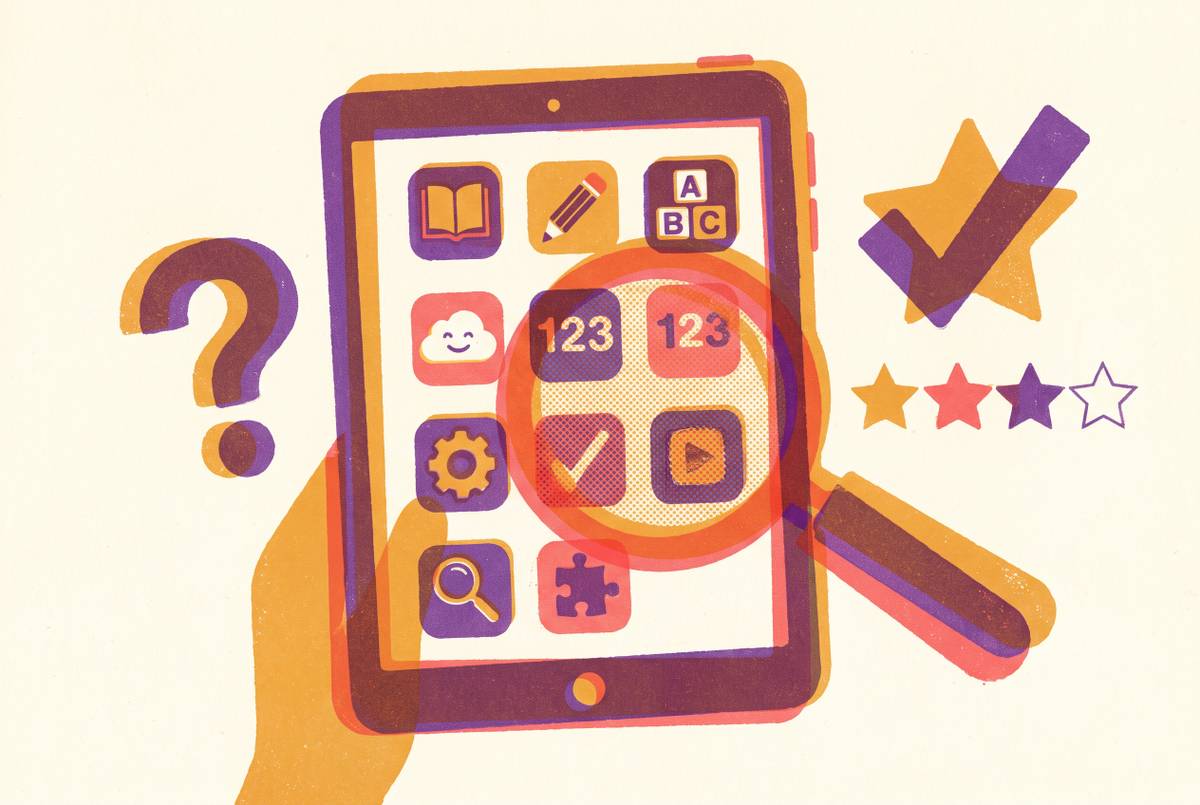
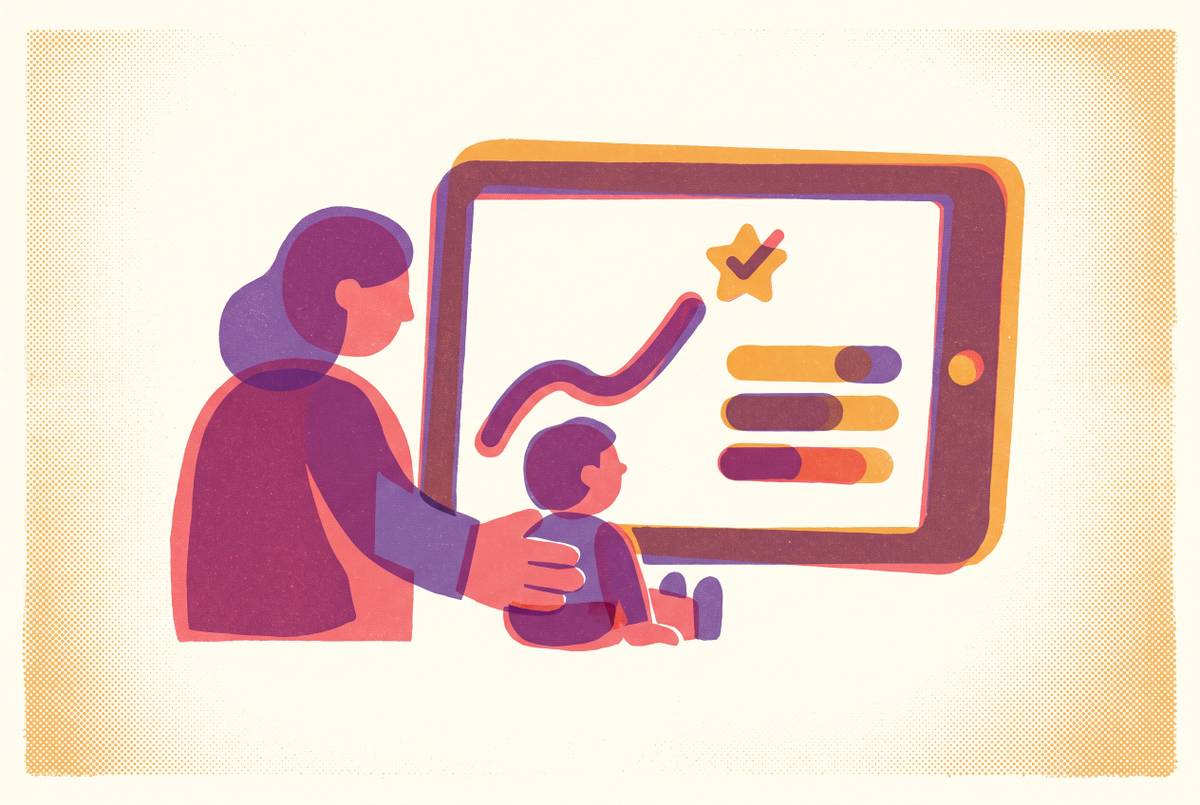
Start with detection: does the app listen to or watch what a child actually does, or does it only log which button they pressed? Then look at the reading curriculum itself and ask whether it's built on the five components of the science of reading, phonemic awareness, phonics, fluency, vocabulary, and comprehension, taught in a structured sequence rather than mixed together loosely. Ask the same kind of question about math: is the curriculum scaffolded toward real numeracy, or is it gamified counting dressed up to look like math instruction? Check whether the app adapts its actual teaching method or only turns a difficulty dial up and down. Make sure there's a way to see what a child is working on and where they're struggling, because visibility for a parent shouldn't be optional. Ask whether the AI behind the app was built specifically to teach young children or whether it's a general-purpose model that happens to be aimed at education. And ask whether the app has any real mechanism stopping it from pushing a child past material they haven't actually mastered yet.
A fixed-curriculum app built on a strong, evidence-aligned sequence is a completely legitimate choice for a family, and it beats a poorly built adaptive app that skips systematic phonics or invents content on the fly. But the ceiling for what an adaptive app can do is higher, as long as its adaptation comes from real detection of what a child understands rather than a tally of right and wrong answers, and as long as the curriculum underneath is held to the same rigor as a well-built fixed sequence. An adaptive math app that can pinpoint exactly where a child has stalled on the numeracy ladder and aim instruction directly at that gap has a structural edge over one that runs every child through identical exercises, and the same principle holds for reading. Ello, built as a mission-driven company, applies this standard across both subjects, and it's available for free, including in Kenya, where it's part of a broader effort to bring this kind of instruction to more children across Africa. The deeper point stands on its own regardless of which app a family chooses: the real advantage of adaptive instruction isn't that it moves faster, but that it can see something a fixed sequence never could, and quality instruction built on that kind of detection shouldn't be out of reach for any child.