What Makes a Free AI Teaching App Truly Right for a Three to Six Year Old Brain
Explicit sequencing and voice feedback separate effective apps from educational entertainment.
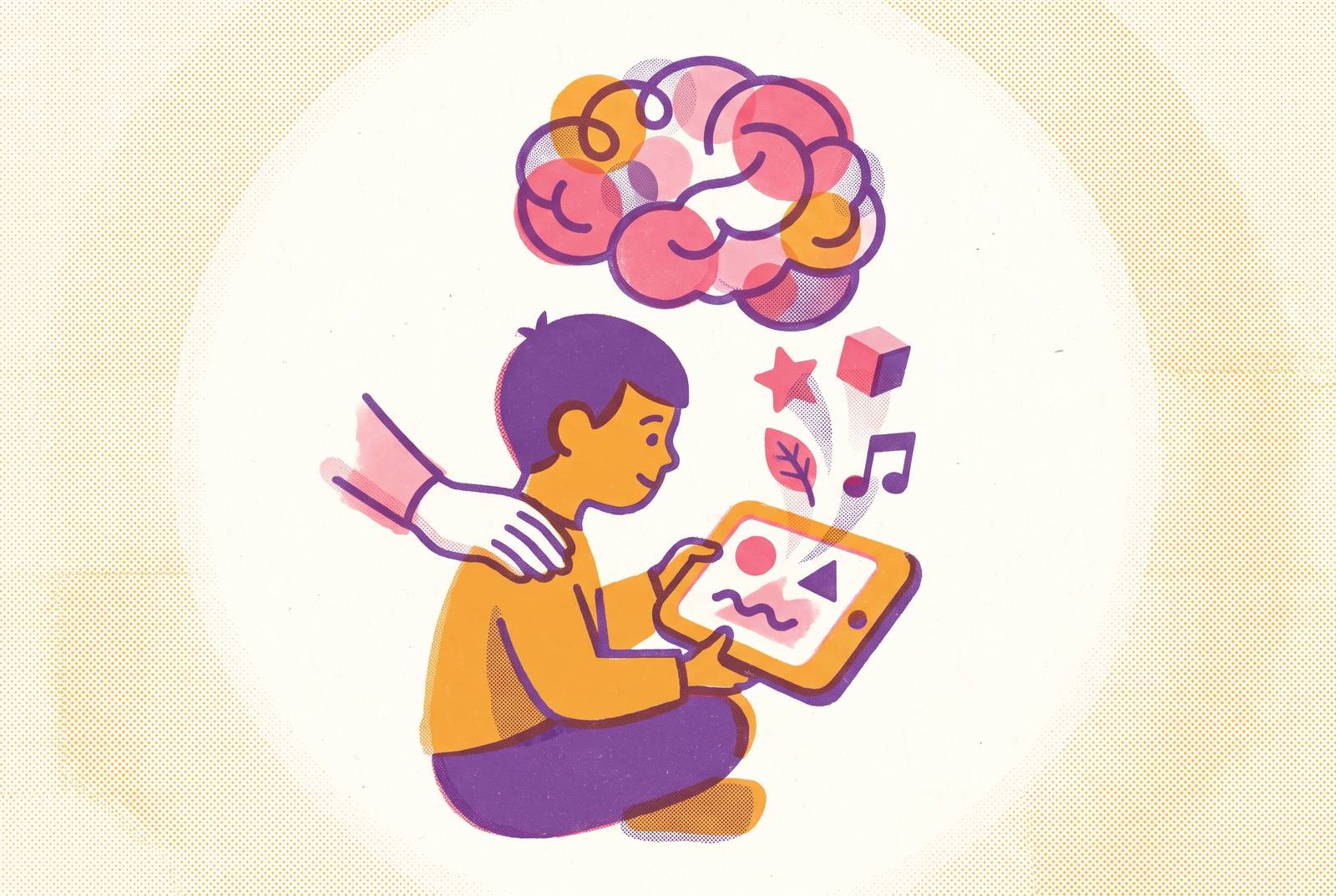
A free AI teaching app is right for a three- to six-year-old when it teaches explicitly, listens to spoken answers, and adjusts practice to the child’s needs. The best fit is defined by a clear learning sequence, useful feedback, and safe design. Reading and early math need teaching.
What the 3–6-year-old brain is actually doing when it learns to read and count
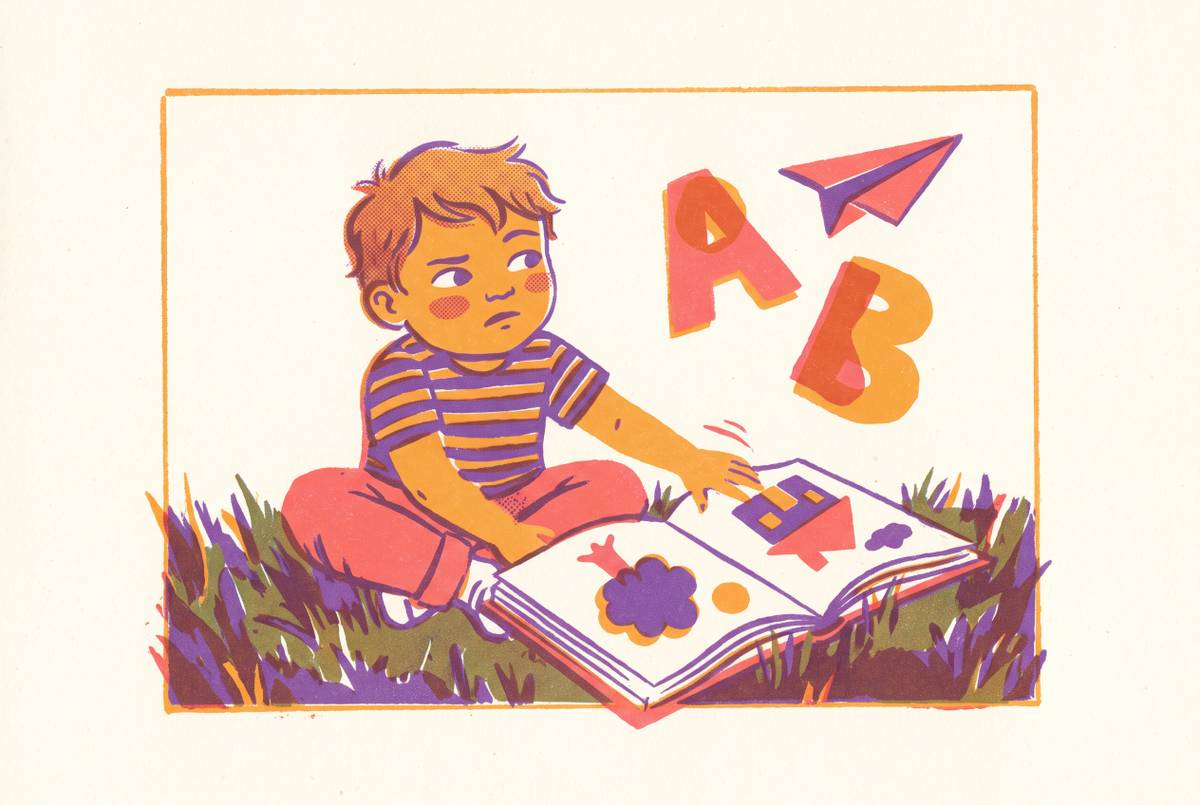
Reading is not something the brain learns through exposure alone. A child must learn how written code stands for speech. Phonics makes that connection by linking spoken sounds, called phonemes, with written letters and letter patterns, called graphemes. Decoding then lets the child use those connections to read words. As decoding becomes fluent, it frees mental effort for understanding what the words mean.
Phonemic awareness is being able to hear and work with each sound in spoken words, while alphabet knowledge gives children the written symbols that go with those sounds. Both are important early screening markers, assessable before a child can read a single word. The two skills work together. Pairing sound instruction with visible letters is more effective than teaching sounds alone because the child can connect what they hear with what they see.
Five components work together, namely phonemic awareness, phonics, fluency, vocabulary, and comprehension. None is optional. A child needs to recognize the written word, know what it means, and understand its place in a sentence or story. This is why good early teaching builds the sound-to-letter connection and gives conversation and understanding a place alongside it.
Children learn about numbers in much the same way. The intraparietal sulcus, a part of the brain that helps process numbers, is active when children first learn number symbols. Language also has a role well before school. A study of 389 toddlers in Germany found that, from roughly age three onward, mathematical language was related to, and predicted, numeracy and general language development. Whether number words alone cause mathematical growth remains unproven. Preschool numerical skills are among the strongest predictors of later academic achievement, so these early needs are specific, sequential, and time-sensitive. Any tool meant to meet them needs the same precision.
Why explicit, sequential instruction — not exploration or entertainment — is the mechanism that works
Systematic phonics follows a plan. Simple patterns come before complex ones, and children review what they know before building on it. The teaching routine is equally clear. An adult or tool demonstrates a skill, gives the child practice with feedback, and gradually leaves more of the work to the learner. That sequence turns an activity into instruction because the child is taught how to do the task before being expected to succeed alone.
Decodable texts give that instruction somewhere to go. They ask children to apply letter-sound connections they have already been taught. This is practice with a defined purpose. Repeatedly retrieving taught connections supports accuracy and automatic word reading, which in turn supports fluency. A collection of attractive stories does not perform the same job simply because the words appear on a screen.
The evidence favors teaching the written code clearly and in a set order over expecting children to work it out by seeing it or exploring it on their own. That does not make play the enemy. Curiosity, relationships, and enjoyment have a place in young children’s learning, but they do not replace instruction in decoding. Play can follow a teaching sequence or take its place. When feedback is immediate, pacing fits the child, and success is within reach, structured practice can feel playful without losing its purpose.
Early math needs the same care with sequence. Counting, cardinality, ordinality, and basic arithmetic belong in relation to each other. Cardinality concerns how many there are, while ordinality concerns order. Mathematical words including “more,” “fewer,” and “before” help children express those relationships. An activity that teaches number symbols but ignores quantity, order, and language leaves out part of the skill it claims to build.
For an app, the practical consequence is straightforward. Entertainment can support a lesson, but it cannot supply the missing lesson. A cheerful response after every tap tells little about whether a child has understood a sound, decoded a word, or grasped a quantity. The design has to make practice depend on the skill being taught.
What family-implemented and home-based instruction reveals about the real teaching opportunity
Children spend most of the time they are awake outside school. That makes home a substantial opportunity for guided practice. The person helping needs a clear sequence and usable materials. Home instruction becomes a realistic option when those demands are built into the method.
The Launch into Reading study tested family-implemented decoding instruction with kindergarteners. Families without specialist training delivered the intervention as intended. The intervention produced moderate to large effects on decoding outcomes on average. Family members also reported high satisfaction with the materials and procedures. The study therefore supports a specific point about home teaching, which is that non-specialists can deliver structured decoding instruction when the approach is clear enough to use.
The Kalulu phonics intervention offers evidence from a different setting. The study, published in Reading Research Quarterly in 2025, tested supplementary structured phonics with Brazilian first-graders outside the main classroom. It found measurable gains in words read per minute, phoneme fluency, and memory. The findings apply specifically to first-graders within the three-to-six age range. Even so, the result reinforces the importance of the instructional method and adherence to its sequence beyond the main classroom.
Neither study shows that a tool works just because it has an AI label. Their findings concern the instruction that was delivered. For home software, the tool must guide the sequence. Voice responsiveness serves that task when a child sounds out a word and needs accurate feedback in the moment. If structured instruction can work at home, the next question is whether an app actually delivers it or only resembles it.
The design features that separate a genuine AI teacher from a well-dressed quiz app
For parents evaluating an app, the first question is whether it listens to the child’s spoken response. A tap can register a choice, but it does not reveal how the child sounds out a word. The useful feature is therefore not a microphone icon but instruction that responds to what the child actually says.
Genuine adaptation adjusts difficulty, content type, and pacing within a session based on the child’s latest performance. A preset level is not the same thing. Nor is a change made only after the session ends. The distinction is whether the app uses the child’s current difficulty to shape the next piece of teaching, rather than merely recording an answer for a later report.
The curriculum needs an equally close look. Parents should be able to tell whether phonemic awareness leads into phonics and whether decodable texts use letter-sound connections the child has already been taught. A large activity library cannot substitute for sequence. Feedback must also be immediate and specific enough to help with the response the child just gave. A final score reports performance, but it does not provide the in-the-moment guidance that supports accurate practice and automatic retrieval.
Counting and cardinality need assessment separate from symbol recognition, with practice matched to the child’s current milestone. Number language should be deliberate. The same scrutiny applies to presentation, because heavy animation, sounds, and visual rewards can capture attention without teaching, especially for children with attention difficulties. Activities that run beyond a young child’s working memory and attention span can also reduce learning transfer.
The interface must work for a pre-reader. Audio narration and large tap targets are basic access features. Instructions that require reading block the very children the tool is meant to teach. Safety belongs in this evaluation too, because children under five cannot distinguish advertising from content. An ad-free environment, compliance with children’s online privacy law, and data minimization through collecting only what learning requires are baseline protections that should be included at no extra charge.
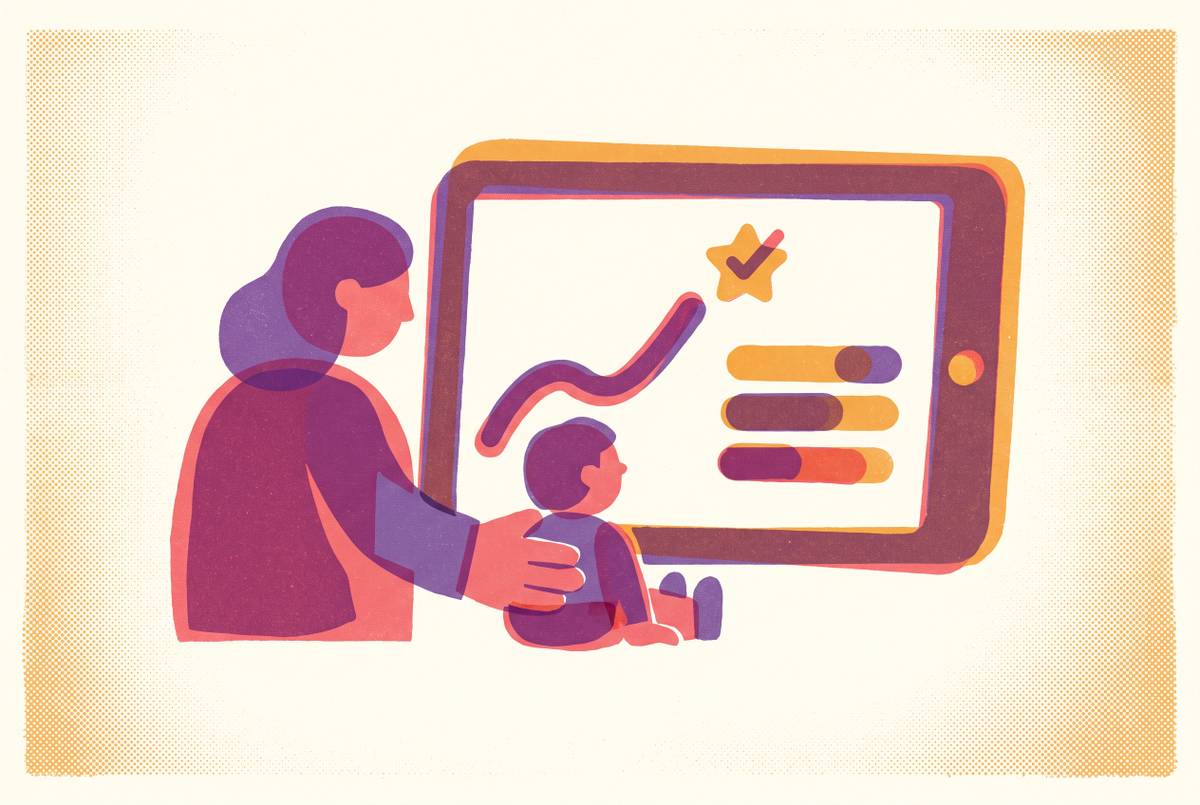
Finally, parents need evidence of progress they can use. A report should show mastered skills, remaining gaps, and what the app is doing about those gaps. Being free to download does not establish whether an app has subscriptions, paid upgrades, or in-app purchases, and none of those pricing distinctions proves that instruction is sound. Very few free apps clear all of the teaching, usability, and safety bars together.
What parents can do right now to support the brain development the research describes
The practical step for parents is to make spoken practice a regular part of reading time. Prioritize daily oral practice over relying on silent reading during these early stages, so that the child’s attempts are audible. That gives feedback a place to begin. Use “just-right texts” in which the child can read the large majority of words independently, with decodable practice matched to taught letter-sound connections. The aim is to build confidence and fluency together.
During shared reading, correction needs a light touch. Gently correct errors that block comprehension rather than interrupting over every error that leaves the meaning intact. Keep the reading experience positive and connected. Targeted decoding practice has its own need for specific sound-to-letter feedback, but a shared story should not become an uninterrupted correction session. Conversation about the words and story helps build the vocabulary and language comprehension that decoding alone cannot supply.
For math, use number language in ordinary daily activity. Counting and words about quantity, comparison, and order give children repeated contact with the relationships they are learning. Words such as “more,” “fewer,” and “before” connect mathematical ideas with spoken language.
When choosing software, apply the same standard to the lesson as to the label. Look for spoken-response listening, real-time adjustment, an expert-built sequence, an ad-free environment, and meaningful progress information. Then check whether the app needs payments or upgrades to keep using it, as well as what it costs to download. A free tool that cannot provide the instruction a child needs is not a bargain in learning terms. Parents who understand the developing skill can choose on firmer ground, because they can recognize when an app keeps a child busy and when it is designed to teach.
Sources
- Reciprocal development of numeracy, mathematical language, and general language skills from age 2 ½ to 4 years: A cross-lagged panel perspective - ScienceDirect
- What the science of reading tells us about how to teach decoding—including phonics - Teach. Learn. Grow.
- Piloting an Approach to Family-Implemented Decoding Instruction for Kindergarten-Aged Children - PMC
- 1 of 16 Reading Research Quarterly, 2025; 60:e70044