Reading Eggs Alternatives for Kids Ages 4 Through 8 Who Resist Reading
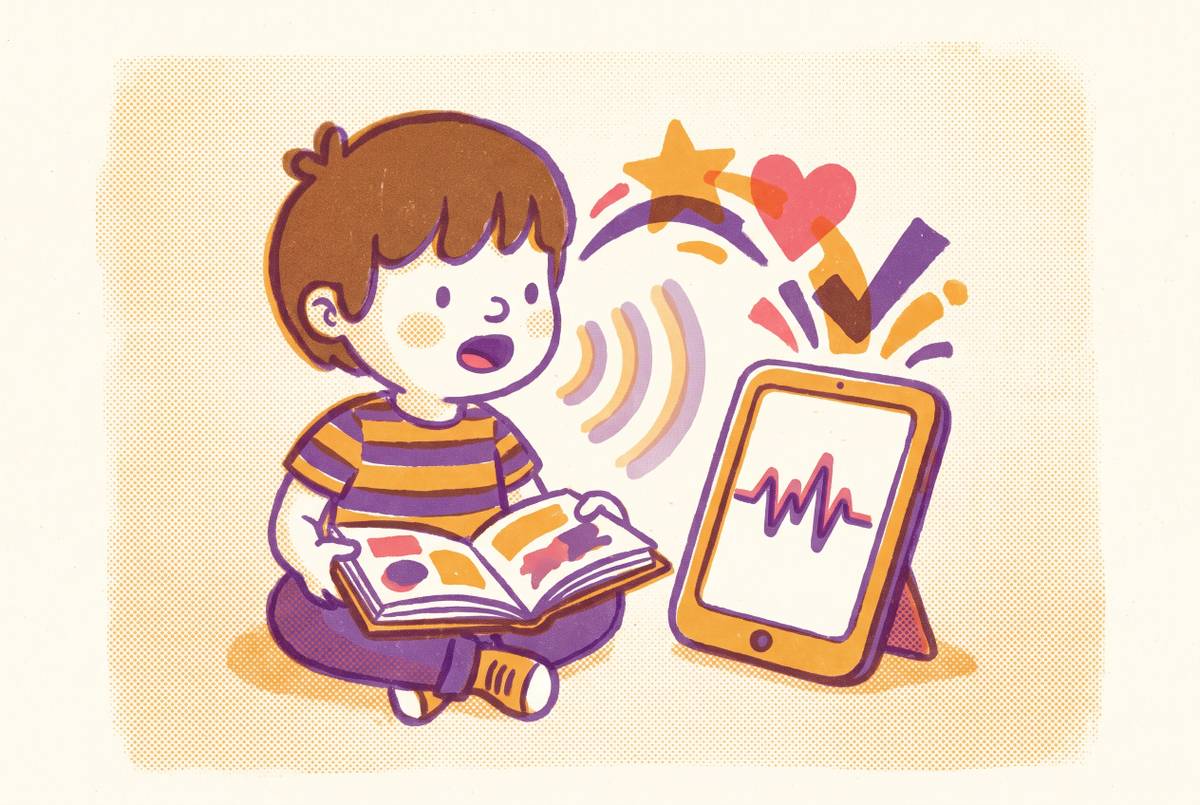
Ello listens to each child read aloud and adjusts teaching word by word to close decoding gaps.
Children who resist reading are usually not bored. They are stuck at the level of decoding, and that gap is the thing any good app, tutor, or home strategy has to solve first. The clearest answer for parents hunting for an alternative to gamified reading apps is a tool built on the Science of Reading that adapts to a child in real time, tracks skill-by-skill progress, and gives the child instruction matched to where they actually are, not where a placement test put them weeks ago. Among the options available for kids ages 4 through 8, Ello stands out as a free AI reading and math teacher that listens to a child read aloud and adjusts its teaching word by word, though several other tools, including Raz-Kids, Skybrary, and Lou Adventures, each serve a narrower purpose well.
Why children who resist reading are usually struggling with decoding
Every parent of a young reader knows the scene. The book comes out, and the groan starts before the cover is even open. Some kids slam it shut. Some cry. Some just say, flatly, "I hate reading," and mean it with the full force a six-year-old can bring to a sentence.
That reaction looks like a motivation problem, but it is almost always a skill problem wearing a motivation costume. A child who has not yet learned to decode fluently has to work enormously hard just to get through a single sentence. Sounding out each word takes so much mental effort that there is nothing left over to track what the sentence actually means. Reading, for that child, is a puzzle with no payoff, repeated on every page.
Research on word decoding backs this up directly: improving a child's decoding skill produces a measurable boost in comprehension, both right away and over the following years. That finding only makes sense because a child who cannot read the words cannot possibly understand them. The emotional signal parents see, the pushed-away book, the tears, the "this is boring," comes after the skill gap. It does not cause it.
This reframe matters because it changes what parents should look for in a fix. A resistant reader does not need more fun. A resistant reader needs the decoding gap closed, and closing it is a teaching problem, not an entertainment problem.
What decoding requires
The Science of Reading names five components that work together to build a reader: phonemic awareness, phonics, fluency, vocabulary, and comprehension. Phonemic awareness and phonics form the foundation, with all five components developing alongside each other.
Phonemic awareness means recognizing and manipulating the individual sounds inside spoken words, the building blocks a child needs before letters even enter the picture. Phonics connects those sounds to letters and letter patterns, taught in a planned, predictable order. The two skills reinforce each other: pairing a sound with its written letter during instruction works better than teaching either skill in isolation.
Once decoding becomes accurate, fluency follows. Once fluency is in place, a child's attention frees up for comprehension, and comprehension is what makes reading feel worth doing. A child still stuck at the decoding stage has not yet reached the part of reading that feels good, so that child avoids it.
Two words separate instruction that works from instruction that does not: systematic and explicit. Systematic means the skills are taught in a planned, logical sequence, not whenever a topic happens to come up. Explicit means the teaching directly tells the child the rule, rather than hoping the child absorbs it by osmosis from being surrounded by books. Research on explicit instruction confirms that this approach, not a language-rich environment by itself, produces consistent gains for early readers, especially those who are struggling, and those two words, systematic and explicit, are the lens for evaluating any reading app a parent is considering.
Why a shinier app with more games does not solve this problem
Parents looking to replace a reading app they have outgrown often land on the same trap: another gamified platform, just with better graphics. Most children's reading apps are built around engagement mechanics first and instructional sequence second. That ordering entertains a resistant reader without touching the reason the child was resisting.
Engagement is not evidence of learning. A child who is mostly tapping, swiping, or watching animations play out is practicing game skills, not reading skills. The clearest warning sign is a child who finishes session after session without ever reading a word or sentence out loud. That app is rewarding presence in the seat, not performance at the task.
A genuinely responsive reading app adjusts to a child's actual level automatically. If every session feels the same no matter how the child performed the day before, the app is not responding to that child. Pre-recorded game loops cannot catch an error the moment it happens, and uncorrected errors do real damage: a child who keeps sounding out a word incorrectly is practicing the wrong pattern into memory.
Parents often push back here with a fair point: "My child actually uses this app willingly." Willingness is necessary, but it is not sufficient. Practicing the wrong skill at the wrong level produces no real gains, and it can increase avoidance the moment the child hits content they genuinely cannot decode. What matters is which app teaches, not which one is more fun.
What real-time adaptive instruction looks like
Instruction that adapts to what a child is doing moment to moment is a different category from instruction that adjusts difficulty based on a test the child took last week. For a resistant reader, real-time adaptation closes the gap, while adjustment based on a past test just repackages it.
Early identification works best when it happens early and targets the right skills. Research on decoding shows that assessing specific early skills, even before a child can read actual words, makes it possible to identify who is likely to struggle. That means the window to intervene opens before resistance has a chance to set in and harden.
Two early signals predict later decoding trouble better than almost anything else: phonemic awareness and alphabet knowledge. A tool that assesses and responds to those two signals specifically is doing something fundamentally different from one that simply sorts a child by an overall reading score. Pace matters just as much as content for a resistant reader. Moving too fast makes the child anxious, and moving too slow makes the child bored. Either one drives the same outcome: avoidance.
Real-time adaptive instruction differs fundamentally from static difficulty levels or pre-recorded game loops, because it can catch and correct errors as they happen and respond to a child's actual pace, something only an AI teacher built specifically for reading instruction can pull off. Ello, for instance, listens to each child read aloud in real time, adjusts its teaching word by word based on what it hears, and decides moment to moment what to teach next, rather than running a fixed game sequence regardless of how the child performs. That mirrors what a skilled reading teacher does one-on-one: catch the misread word, offer the right prompt, and decide on the spot whether to stay on a concept or move forward.
What each major alternative offers a resistant reader aged 4 to 8
The right tool depends on where a child is stuck in the decoding chain, so it helps to look at what each option actually does.
Ello is a free AI reading and math teacher for ages 4 through 9, covering reading from Pre-K through Grade 5 and math from Pre-K through Grade 2, available on iOS and Android with no ads and no in-app purchases (an optional Unlimited upgrade is available). It listens to each child's voice in real time and adapts instruction moment to moment, with a curriculum built by teachers and grounded in the Science of Reading. It covers the arc from kindergarten reading through fluency, though it requires a child to already have basic decoding in place, so it is not built for true pre-readers. Children can also co-create their own stories and read them back. Ello is a Public Benefit Corporation, free to start, and available across Africa, including Kenya. It fits best for a resistant reader aged 4 to 9 whose root problem is a decoding gap, and for families who need one-on-one instruction but cannot access or afford a reading tutor.
Raz-Kids, from Learning A-Z, is a leveled digital reading library built around structured practice. Each book follows a three-step process: Listen, Read, Record, Quiz, which builds familiarity with the text, then checks fluency through a recording tool, then tests comprehension through a quiz. It offers hundreds of books sorted by reading level and gives parents and teachers usable data. It fits children who already have basic decoding in place and need structured leveled practice, and it's less suited to a child still stuck at phonemic awareness or early phonics.
Skybrary is an interactive e-book and video library for ages 3 through 9. Each book offers a "Read to Me" narrated mode or an independent, self-directed reading mode, designed to build comprehension through interactivity. It fits well for building reading motivation and comprehension once basic decoding is already there, though it's less effective as a phonics intervention for a child still stuck earlier in the chain.
Lou Adventures, made by Sparkstone, is a speech-recognition adventure app aimed at roughly grades 2 through 4. Children read aloud, answer questions out loud, and solve mysteries alongside a dog companion named Lou, using speech recognition and game-based storytelling to support comprehension. It fits independent readers in grades 2 through 4 who resist reading because it feels tedious, not because they lack decoding skills. The story-driven format can re-engage a reluctant reader at that stage.
Libby is a free e-book and audiobook app that connects to a family's local public library (a library card is required). It offers thousands of titles, kid-friendly filters, and a dyslexia-friendly font option. It is not an instructional tool. It works best as a supplement once a child has functional decoding, where audiobooks can build vocabulary and listening comprehension while decoding is still developing.
What parents can do at home to support a resistant reader
No app, however well built, replaces a parent sitting beside a child with a book. App-based instruction works best alongside daily habits at home that are short, low-pressure, and consistent.
Dialogic reading is one of the better-supported home techniques available. During shared reading, ask open-ended questions, prompt the child to predict what happens next or recall what already happened, and let the child take the lead in telling parts of the story back. These moves build comprehension and vocabulary without adding pressure to the decoding itself.
When a child misreads a word, help them through it and move on. Correct every error, but do it without drama. Letting errors slide reinforces the wrong pattern, and turning every correction into a moment of failure teaches a child to fear the next mistake more than to fix it.
Praise works better when it's specific to the skill. "You blended those sounds together perfectly" tells a child what they did right and makes it more likely they'll do it again. A generic "good job" carries no information and teaches nothing.
Explain to children why reading matters: to learn something new, to enjoy a story, to talk to people. A child who understands the point of a skill has a reason to push through the effortful parts of learning it.
Short, frequent sessions beat long, rare ones for a resistant reader. Two brief reading periods a day, rotating between fiction and nonfiction, build the habit without triggering the avoidance response that longer sessions tend to produce.
How to tell whether any app, including the one just downloaded, is working
Reading resistance signals a skill gap, so the only real test of any app or strategy is whether the underlying skills are growing. Engagement by itself proves nothing.
The first question to ask of any app: can a parent or teacher see granular progress data, not just a count of completed sessions? A child can finish every session on the schedule and still be stuck at exactly the same decoding level as a month ago.
Progress in early reading does not move in a straight line. Some skills develop ahead of others, and a child can plateau on one measure while gaining ground on another. That's why a flat summary score, "your child is at level 3," tells a parent far less than a skill-by-skill breakdown of what's improving and what isn't.
A few signs point to real progress: the child starts attempting unfamiliar words instead of skipping them, reading-related meltdowns happen less often, and the child occasionally picks up a book without being asked. A few signs point the other way: the child does fine inside the app but can't read the same words anywhere else, in a book, on a cereal box, on a road sign. That mismatch means the child has learned to navigate the app, not to read.
Ello's parent progress reporting is built around exactly this kind of visibility: not a trophy count, but an evolving, skill-by-skill picture of where a child stands in the reading development arc and what comes next. Parents who understand that reading resistance comes from a cognitive gap, who choose instruction grounded in the Science of Reading, and who track real skill growth rather than session counts are giving their child the clearest path toward becoming a fluent, confident reader.
Sources
- 1 of 16 Reading Research Quarterly, 2025; 60:e70044
- What the science of reading tells us about how to teach decoding—including phonics - Teach. Learn. Grow.
- The Contribution of Phonological Awareness to Reading Fluency and Its Individual Sub-skills in Readers Aged 9- to 12-years
- Parent Strategies for Improving Their Child’s Reading and Writing
- The science of reading explained - Teach. Learn. Grow.
- Supporting fluency and comprehension using practices grounded in the science of reading - Teach. Learn. Grow.
- Kids’ reading apps failing to deliver educational value
- Scalable Early Childhood Reading Performance Prediction